
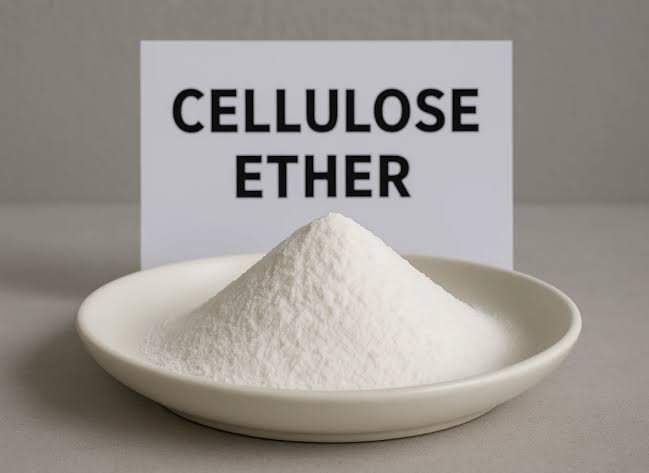
1. What Is Cellulose Ether?
Cellulose ether is a group of water-soluble or water-dispersible polymers derived from natural cellulose. Through chemical modification, hydroxyl groups in the cellulose molecular structure are partially replaced with ether groups, giving the material different properties such as water retention, thickening, film formation, and rheology modification.
Natural cellulose is commonly obtained from purified wood pulp or cotton linters. Although cellulose itself has limited solubility in water, etherification modifies its molecular structure and improves its functionality, making it suitable for various industrial applications.
Today, cellulose ethers are widely used in construction materials, paints and coatings, pharmaceuticals, personal care products, and other industries.
In the construction industry, cellulose ether is particularly important in dry-mix mortar formulations. It helps improve water retention, workability, consistency, and application performance in cement-based and gypsum-based products.
2. How Is Cellulose Ether Produced?
Cellulose ether is manufactured through a series of chemical processing steps that convert natural cellulose into functional polymer products.
The typical production process includes:
1. Raw Material Preparation
Purified wood pulp or cotton linters are selected as the primary cellulose sources. The raw materials are processed to achieve the required purity and consistency.
2. Alkalization
Cellulose reacts with an alkaline solution, typically sodium hydroxide, to form alkali cellulose. This step activates the cellulose structure for subsequent chemical modification.
3. Etherification
Alkali cellulose reacts with specific etherifying agents to introduce different substituent groups into the cellulose molecular chain.
For example, methyl chloride is used to introduce methyl groups, while propylene oxide and ethylene oxide are used to introduce hydroxypropyl and hydroxyethyl groups, respectively.
The choice of etherifying agents determines the type and characteristics of the resulting cellulose ether.
4. Purification and Drying
After etherification, the product undergoes washing, neutralization, drying, and grinding to remove by-products and achieve the required powder properties.
The final product is tested for parameters such as viscosity, moisture content, pH, and particle size to ensure consistent quality.
3. What Are the Main Types of Cellulose Ether?
Cellulose ethers can be classified according to their chemical substituents and modification methods. Different types have different solubility characteristics, thickening capabilities, and application properties.
The most common types include:
| Tipo | Full Name | Main Characteristics | Aplicaciones típicas |
| HPMC | Hidroxipropilmetilcelulosa | Water retention, thickening, workability | Tile adhesive, wall putty, plaster |
| HEMC | Hidroxietilmetilcelulosa | Water retention, rheology modification | Dry-mix mortar, gypsum products |
| HEC | Hidroxietilcelulosa | Thickening, stabilization | Water-based paints and coatings |
| MC | Metilcelulosa | Thickening, water solubility | Construction and industrial applications |
| CMC | Carboxymethyl Cellulose | Thickening, stabilization | Detergents, food and industrial products |
| HPC | Hydroxypropyl Cellulose | Film formation, thickening | Pharmaceutical and industrial applications |
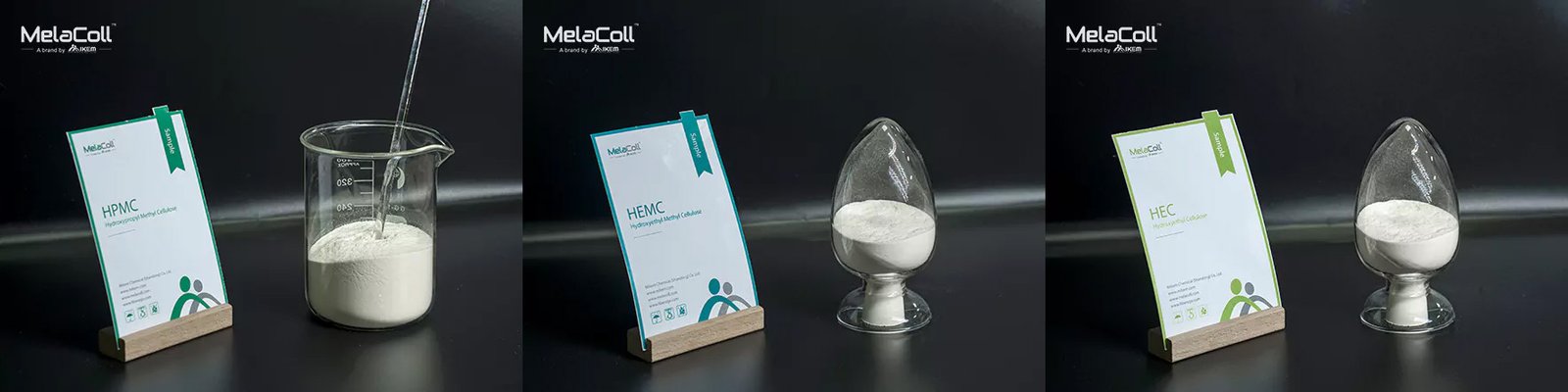
Among these products, HPMC, HEMC, and HEC are particularly relevant to construction and building material formulations.
- HPMC:Commonly used in cement-based mortar products because of its water retention, thickening, and workability properties.
- HEMC:Used in dry-mix mortar and gypsum-based formulations to improve consistency, water retention, and application performance.
- HEC:Primarily used as a thickener and rheology modifier in water-based paints, coatings, and other aqueous systems.
The appropriate type depends on the formulation, required performance, and intended application.
4. Key Properties of Cellulose Ether
Cellulose ether has several physical and chemical properties that determine its behavior in aqueous systems and construction formulations. The most important properties include water solubility, viscosity, thermal gelation, and film formation.
4.1 Water Solubility
Water solubility is an important characteristic of cellulose ether. Different types exhibit different dissolution behaviors depending on their chemical structure and degree of substitution.
For example, HPMC and HEMC are generally soluble in cold water but may disperse poorly in hot water, while HEC can dissolve in both cold and hot water under suitable conditions. Proper dispersion and dissolution are important for achieving uniform viscosity and consistent performance in formulations.
4.2 Viscosity
Viscosity describes a cellulose ether solution's resistance to flow and is one of the key parameters used to classify commercial grades.
It is influenced by factors such as molecular weight, substitution characteristics, concentration, and temperature. Different viscosity grades are developed to meet the requirements of various applications, from low-viscosity systems to formulations requiring stronger thickening effects.
4.3 Thermal Gelation
Thermal gelation refers to the process in which certain cellulose ethers, particularly HPMC and HEMC, form a gel-like structure when heated above a specific temperature. This occurs as heating reduces the hydration of polymer chains and promotes molecular association.
The gelation temperature varies depending on the cellulose ether type and its chemical modification. This property can influence cellulose ether behavior under different temperature conditions.
4.4 Film Formation
Certain cellulose ethers can form transparent, flexible films after water evaporates from their solutions. Film-forming ability depends on the polymer structure, molecular weight, and formulation conditions.
This property is useful in applications requiring surface coating, binding, or protective film formation, although its importance varies among different cellulose ether types.
5. Functions of Cellulose Ether in Construction Materials
In construction formulations, cellulose ether does more than modify viscosity. It helps control the behavior of fresh mortar and improves its application performance.
5.1 Water Retention
Cellulose ether helps retain water in cement-based and gypsum-based materials, reducing premature water loss caused by substrate absorption and evaporation. This provides more favorable conditions for cement hydration and helps maintain mortar workability during application.
5.2 Thickening Effect
By increasing the viscosity of the liquid phase, cellulose ether helps adjust mortar consistency and reduce excessive flow. This contributes to a more stable mixture and supports uniform material application.
5.3 Improved Workability
Cellulose ether helps improve the handling and application characteristics of mortar. Depending on the formulation, it can contribute to smoother troweling, better consistency, and easier spreading.
5.4 Extended Open Time
In tile adhesive formulations, water retention provided by cellulose ether helps slow premature drying after application. This can extend the period during which tiles can be adjusted while maintaining suitable adhesive performance.
5.5 Sag Resistance
Cellulose ether contributes to the viscosity and structural stability of fresh mortar, helping reduce downward movement when materials are applied to vertical surfaces. This is particularly important in tile adhesives, wall putty, and plaster formulations.
The actual performance of cellulose ether depends on its type, viscosity grade, dosage, and compatibility with other formulation ingredients.
6. Applications of Cellulose Ether in Construction
6.1 Tile Adhesive
Tile adhesive is one of the major applications of cellulose ether, especially HPMC and HEMC.
In tile adhesive formulations, cellulose ether helps improve water retention, workability, and open time. It also contributes to consistency and sag resistance, helping the adhesive remain workable during application.
The appropriate cellulose ether grade depends on the tile size, substrate, cement composition, and required application performance.
6.2 Wall Putty
Wall putty is used to level and smooth wall surfaces before painting or finishing.
Cellulose ether helps improve water retention, consistency, and spreading properties. It can also contribute to better application performance and reduce premature drying during construction.
HPMC and HEMC are commonly selected according to the required viscosity and formulation characteristics.
6.3 Gypsum Plaster
In gypsum-based plaster, cellulose ether helps improve water retention and workability.
It supports a more consistent application process and helps control water loss during application. The selection of a suitable product should consider the gypsum system and its setting characteristics.
6.4 Self-Leveling Compounds
Self-leveling compounds require carefully controlled flow and rheological properties to achieve a smooth, even surface.
Cellulose ether may be used to adjust viscosity and help maintain mixture stability. However, excessive thickening can negatively affect flowability, so product selection and dosage require careful formulation testing.
6.5 Exterior Insulation and Finish Systems (EIFS)
In EIFS and related insulation mortar systems, cellulose ether contributes to water retention, consistency, and workability.
It helps maintain suitable application properties in adhesive and basecoat mortars, supporting more consistent construction performance.
7. HPMC vs HEMC vs HEC: What's the Difference?
HPMC, HEMC, and HEC are three commonly used cellulose ethers, but they differ in chemical structure, performance characteristics, and application suitability. Choosing the right type depends primarily on the formulation and the properties required in the final product.
7.1 Key Differences Between HPMC, HEMC, and HEC
| Comparison | HPMC | HEMC | HEC |
| Chemical Modification | Hydroxypropyl + Methyl | Hydroxyethyl + Methyl | Hydroxyethyl |
| Main Functions | Water retention, thickening, workability | Water retention, thickening, workability | Thickening, stabilization, rheology control |
| Thermal Gelation | Yes | Yes | Generally no typical thermal gelation like HPMC and HEMC |
| Common Applications | Tile adhesive, wall putty, plaster | Tile adhesive, dry-mix mortar, gypsum products | Water-based paints, coatings |
7.2 Which Cellulose Ether Should You Choose?
The choice of cellulose ether depends on the application, formulation, and desired performance rather than the product type alone.
- HPMC:Commonly used in tile adhesives, wall putty, cement-based plasters, and other dry-mix mortar products. It provides water retention, thickening, and improved workability.
- HEMC: Commonly used in tile adhesives, wall putty, cement-based mortars, and gypsum-based products. Compared with HPMC, HEMC generally has a higher thermal gelation temperature, which can help maintain its thickening and water-retention functions over a wider temperature range. It is particularly worth considering for formulations requiring consistent application performance under warmer conditions.
- HEC:Primarily used in water-based paints, coatings, and other aqueous formulations where thickening, viscosity control, and stabilization are required.
HPMC and HEMC applications often overlap, so the final selection should consider viscosity grade, water retention, thermal gelation behavior, compatibility, and formulation testing.
7.3 What Factors Should Be Considered When Selecting Cellulose Ether?
Selecting the right cellulose ether involves more than choosing HPMC, HEMC, or HEC. Manufacturers should also evaluate:
- Viscosity Grade:Determines the thickening effect and influences the consistency of the final product.
- Water Retention:Particularly important for cement-based and gypsum-based materials.
- Compatibility:The cellulose ether should work well with cement, gypsum, polymers, and other formulation additives.
- Application Requirements:Different products require different balances of workability, open time, sag resistance, and flow properties.
There is no universally best cellulose ether. The most suitable product is the one that meets the performance requirements of the specific formulation. Laboratory testing and dosage adjustments are recommended before finalizing product selection.
8. How to Choose the Right Cellulose Ether?
Selecting the right cellulose ether is essential for achieving the desired performance in a construction formulation.
The following factors should be considered:
1. Application Requirements
Different applications require different functional properties. Tile adhesive may prioritize water retention and open time, while self-leveling compounds require carefully balanced flow and viscosity.
2. Viscosity Grade
Viscosity affects the consistency and rheological behavior of the mixture. A higher viscosity grade does not automatically mean better performance. The appropriate grade depends on the formulation and target application.
3. Water Retention Performance
For cement-based and gypsum-based products, water retention is an important selection criterion. The required performance depends on the substrate, environmental conditions, and formulation.
4. Compatibility with Other Ingredients
Cellulose ether interacts with other components, including cement, gypsum, starch ether, redispersible polymer powder, and other additives. Compatibility testing is important before finalizing a formulation.
5. Dosage and Formulation Testing
The optimal dosage varies according to the product grade, raw materials, and application requirements. Laboratory trials are recommended to evaluate workability, water retention, open time, and other relevant properties.
Working with an experienced cellulose ether manufacturer can also help identify suitable grades and optimize formulations for specific applications.
9. Frequently Asked Questions About Cellulose Ether
What is the main purpose of cellulose ether in mortar?
Its main purposes include improving water retention, adjusting viscosity, enhancing workability, and helping maintain suitable application properties in fresh mortar.
Is HPMC the same as cellulose ether?
No. HPMC is one type of cellulose ether. Cellulose ether is a broader category that also includes HEMC, HEC, MC, CMC, and HPC.
What is the difference between HPMC and HEMC?
HPMC contains hydroxypropyl and methyl substituents, while HEMC contains hydroxyethyl and methyl substituents. They differ in chemical structure and may exhibit different solubility, thermal gelation, and application performance depending on their grades.
Can cellulose ether improve tile adhesive performance?
Yes. Cellulose ether helps improve water retention, workability, consistency, and open time in tile adhesive formulations. Its contribution to overall adhesive performance depends on the complete formulation.
Does higher viscosity mean better cellulose ether quality?
Not necessarily. Viscosity is only one performance parameter. The ideal product should provide a suitable balance of water retention, workability, compatibility, and other application-specific properties.
Conclusión
Cellulose ether is an important functional additive in modern construction materials. Through its water retention, thickening, and rheology-modifying properties, it helps improve the application performance of tile adhesives, wall putty, gypsum plaster, self-leveling compounds, and other dry-mix mortar products.
HPMC, HEMC, and HEC each offer different characteristics and application advantages. Choosing the right type and viscosity grade requires consideration of the formulation, construction conditions, and desired performance.
As a cellulose ether manufacturer, Melacoll provides HPMC, HEMC, and HEC solutions for different industrial and construction applications. Contact our team to discuss your formulation requirements and identify a suitable cellulose ether grade.

Publicado por Melacolldejar palabras
Hola, soy Ella, llevo 12 años en la industria del éter de celulosa. años.

Dejar una respuesta