
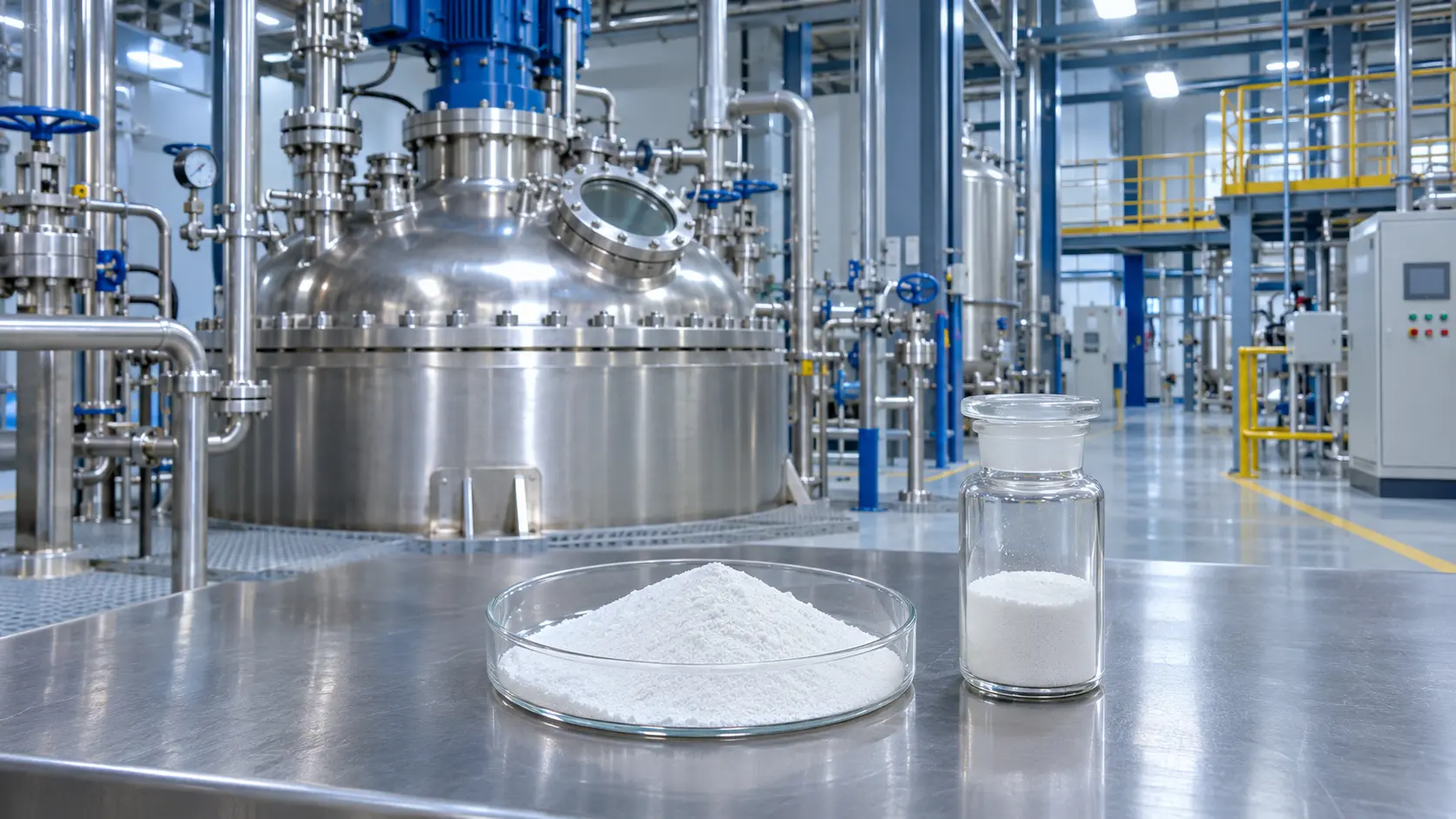
PVC resin quality is shaped long before the powder reaches a processing line. During suspension polymerization, small differences in droplet stability and particle formation can affect the resin’s particle size distribution, porosity, bulk density and plasticizer absorption.
That is one reason PVC grade HPMC deserves careful attention. Hydroxypropyl methylcellulose is used as a cellulose ether suspending agent in some PVC suspension systems. It helps stabilize the dispersed vinyl chloride droplets and can influence the structure of the resin particles as they form. The result depends on the HPMC grade and the wider process, so selecting a product by viscosity alone is rarely enough.
What Happens During PVC Suspension Polymerization?
In suspension polymerization, vinyl chloride monomer (VCM) is dispersed as droplets in an aqueous phase. Polymerization takes place inside those droplets, which gradually become PVC resin particles. A suspending agent helps keep the droplets from merging excessively while the reaction proceeds.
HPMC works as part of this stabilizing system. Its behavior at the water–monomer interface, along with the properties of the aqueous phase, can affect how droplets form and remain dispersed. Agitation, phase ratio, reactor design and other formulation components also influence the final particle structure.
This is why an HPMC grade should be evaluated within the actual process where it will be used. The same grade may not produce the same result when the mixing conditions, stabilizer combination or target resin specification changes.
What Does HPMC Do in PVC Resin Production?

It helps stabilize monomer droplets
As a protective colloid, HPMC helps limit uncontrolled droplet coalescence. If droplets merge too readily, their size and distribution can shift, creating an inconsistent basis for particle formation. A suitable HPMC suspending agent helps the producer maintain a more controlled suspension system.
HPMC does not control droplet stability by itself. Agitation intensity, interfacial behavior, phase viscosity and the concentration of the dispersed phase all play a role. For that reason, the goal is to select a grade that works with the reactor and the rest of the suspension formulation.
It can influence particle size and morphology
The conditions that stabilize VCM droplets also affect the resin particles that develop from them. The molecular properties of a cellulose ether—including molecular weight, substitution and how substituent groups are distributed along the cellulose chain—can change its performance in the suspension system.
These properties matter because PVC manufacturers often need a particular particle size distribution and particle shape for their end use. However, it would be misleading to say that HPMC alone determines morphology. It is one adjustable part of a process that includes equipment, operating conditions and other additives.
It may affect porosity and plasticizer absorption
Porosity is another important consideration when selecting PVC grade HPMC. The internal structure of PVC resin particles affects how they interact with plasticizers during downstream processing. A change in the suspension system can therefore influence resin properties that matter to compounding and processing.
The relationship is not as simple as “more porosity is always better.” Different PVC applications have different resin requirements, and changes in porosity may also affect other properties, including bulk density. The right balance depends on the grade being produced and the performance requirements of the finished material.
Why Construction-Grade HPMC Is Not Automatically Suitable
HPMC is used in many industries, but an HPMC grade developed for one application should not be assumed to work in another. Construction-grade products, for example, are often selected for water retention, workability and viscosity in mortar. PVC suspension polymerization places different demands on the cellulose ether.
For PVC production, the relevant question is not simply whether a powder thickens water. Producers need to understand how the grade behaves in the suspension system and how it affects the properties of the resin beads. Two products with similar viscosity readings may differ in substitution characteristics or other properties that matter at the interface.
That is why a PVC grade HPMC should be assessed against the producer’s process and resin targets. A technical data sheet is a starting point, but it cannot replace a controlled trial in the intended suspension system.
How to Select HPMC for PVC Suspension Polymerization
A useful selection process starts with the resin specification and works backward to the suspending system. Several factors deserve attention.
- Molecular weight and solution viscosity: Viscosity can help describe a grade, but it is meaningful only when the measurement method and test conditions are clear. A higher viscosity does not automatically mean better particle control.
- Substitution characteristics: The degree and distribution of substitution can affect how cellulose ether behaves in the suspension system. These characteristics should be reviewed alongside viscosity rather than treated as secondary details.
- Compatibility with other suspending agents: HPMC may be used alongside PVA or other components, depending on the process. Compatibility and performance should be checked in the actual formulation.
- Consistency between batches: Variation in a suspending agent can make it harder to maintain stable production. Suppliers should be able to explain how they control product specifications and provide technical documents for evaluation.
The selection process should also account for how the product is prepared and introduced into the system. Dispersion, hydration, addition sequence and mixing conditions can affect how consistently an HPMC grade performs. The production team should follow the supplier’s handling guidance and compare results using consistent preparation procedures.
Process Conditions Matter Alongside HPMC Grade
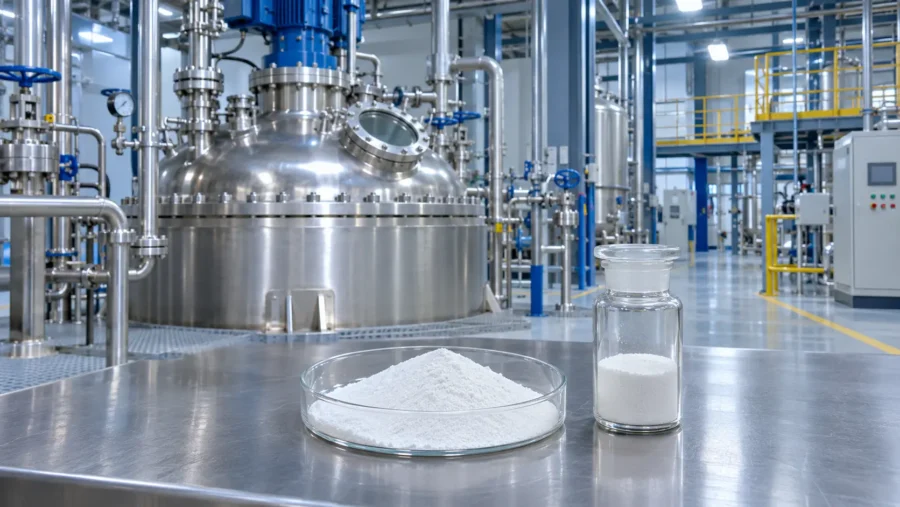
Even a carefully selected HPMC may perform differently when process conditions change. Agitation influences droplet breakup and coalescence; the ratio of VCM to water changes the environment in which the droplets are dispersed; and reactor geometry affects how mixing energy is distributed.
The stabilizer system matters too. If a producer changes both the HPMC grade and another formulation component at the same time, it can be difficult to tell which change caused a difference in resin properties. Keeping process conditions stable during initial comparisons makes the results easier to interpret.
For these reasons, troubleshooting should look at the whole suspension system. If particle size distribution shifts, for example, the team should review the suspending agent and the mixing conditions together. A change in the HPMC grade may be part of the solution, but it should not be treated as the only possible cause.
A Practical Way to Evaluate a New HPMC Grade
A structured trial can help PVC producers assess a new HPMC grade without relying on a single measurement.
- Define the target. Record the required particle size distribution, bulk density, porosity and plasticizer absorption for the PVC resin being produced.
- Set a baseline. Document the current suspension formulation, process conditions and resin test results.
- Change one factor at a time. Compare the candidate PVC grade HPMC under controlled conditions, using the supplier’s technical guidance for the trial.
- Review the full result. Check suspension stability and the finished resin properties rather than judging the grade by viscosity alone.
- Confirm at a suitable scale. A promising laboratory result should be checked under representative production conditions before it is treated as a reliable process change.
This approach gives the technical team a clearer picture of how the grade performs and whether it fits the existing production system. It also helps avoid drawing conclusions from a change that may have come from mixing, dosage, or another part of the formulation.
Sıkça Sorulan Sorular
What is PVC grade HPMC used for?
PVC grade HPMC is used as a cellulose ether suspending agent in PVC suspension polymerization. It helps stabilize the dispersed VCM droplets and can contribute to control of resin particle characteristics.
Does HPMC replace PVA in a PVC suspension system?
Not necessarily. HPMC may be used as part of a suspension system that also includes PVA or other components. Whether it replaces or complements another agent depends on the formulation, process and target resin properties.
Is higher-viscosity HPMC better for PVC production?
Not by itself. Viscosity is one specification to consider, but substitution characteristics, suspension behavior, compatibility and process conditions also matter. A higher viscosity reading does not guarantee a better resin result.
Is there one standard dosage for HPMC in PVC suspension polymerization?
There is no single dosage that can be recommended for every process. The appropriate level depends on the formulation, equipment, operating conditions and target PVC resin properties. Producers should work from supplier guidance and validate changes through controlled trials.
Working With a PVC Grade HPMC Manufacturer
Selecting a suspending agent is a process decision as much as a purchasing decision. PVC producers need clear product specifications, consistent supply and technical information that helps them evaluate a grade in their own formulation.
Melacoll’s published material describes its HPMC production technology as supporting PVC-grade products. For producers considering a new HPMC for PVC suspension polymerization, the next step is to discuss the resin target and process conditions with the supplier, then evaluate the candidate grade through a controlled trial.
If you are reviewing PVC grade HPMC for your production line, Melacoll ile iletişime geçin to discuss your application and request product information for technical evaluation.

Melacoll tarafından gönderildikelimeleri bırakın
Merhaba, ben Ella, 12 yıldır selüloz eter endüstrisinde çalışıyorum. yıllar.

Bir Cevap Bırakın