

Hidroxipropil metilceluloză (HPMC) is a non-ionic cellulose ether widely used as a thickener, water-retention agent, binder, stabilizer, film former, and rheology modifier in many industrial formulations.
One of the most important properties to understand when using HPMC is its solubility.
Is HPMC soluble in cold water? What happens in hot water? Can HPMC dissolve in ethanol or isopropyl alcohol?
The answer depends on several factors, including the HPMC grade, degree of substitution, solvent composition, temperature, and concentration.
This guide provides a practical HPMC solubility chart and explains how HPMC behaves in water, alcohols, and common organic solvent systems.
HPMC Solubility Chart
The following chart summarizes the typical solubility behavior of HPMC in common solvent systems.
| Solvent or Medium | Typical HPMC Solubility | General Behavior |
|---|---|---|
| Cold Water | Soluble | Hydrates and forms a viscous colloidal solution |
| Hot Water | Generally does not dissolve directly | Disperses and may undergo thermal gelation depending on grade and temperature |
| Ethanol | Limited and grade-dependent | Many standard grades have poor solubility in high-concentration ethanol |
| Ethanol/Water Mixture | Grade- and ratio-dependent | Water can improve hydration and dissolution |
| Isopropyl Alcohol (IPA) | Generally limited | Usually requires sufficient water for effective hydration |
| IPA/Water Mixture | Grade- and ratio-dependent | Solubility improves when sufficient water is present |
| Methanol | Grade-dependent | Solubility can vary significantly with substitution type |
| Acetone | Generally limited for standard water-soluble grades | Special grades or mixed-solvent systems may behave differently |
| Other Organic Solvents | Usually limited | Depends strongly on HPMC substitution and solvent composition |
| Mixed Water/Organic Solvents | Variable | Certain HPMC grades can be compatible with selected mixed-solvent systems |
Important: This chart describes general HPMC behavior rather than a universal specification. Different HPMC grades can have different substitution levels and therefore different solvent compatibility.
Is HPMC Soluble in Water?
Yes. HPMC is generally soluble in cold water and forms a clear to slightly hazy viscous solution depending on the grade, concentration, particle size, and preparation method.
Cold-water solubility is one of the main reasons HPMC is widely used in water-based formulations.
When HPMC comes into contact with water, the polymer particles hydrate and swell. As hydration continues, the polymer chains disperse into the aqueous phase and gradually produce a viscous solution.
The final viscosity depends strongly on the HPMC grade and polymer concentration.
Higher-viscosity grades can produce very high solution viscosity even at relatively low concentrations.
HPMC Solubility in Cold Water
HPMC has good cold-water solubility, but correct dispersion is important.
If HPMC powder is added too quickly to water, the outside of the particles can hydrate immediately and form a gel layer. This can trap dry powder inside and create lumps or “fish eyes.”
For this reason, effective dispersion techniques are important when preparing an HPMC solution.
A typical hydration process involves:
1. Dispersing HPMC uniformly without allowing large lumps to form.
2. Providing adequate agitation.
3. Allowing sufficient time for complete hydration.
4. Adjusting the mixing method according to the HPMC viscosity grade and formulation.
Once fully hydrated, HPMC can form a stable and homogeneous viscous aqueous solution.
Is HPMC Soluble in Hot Water?
The behavior of HPMC in hot water is different from its behavior in cold water.
HPMC normally does not dissolve directly in sufficiently hot water in the same way that it dissolves in cold water. Instead, elevated temperature can reduce hydration and eventually cause thermal gelation.
This thermal gelation behavior is one of the characteristic properties of methylcellulose-based cellulose ethers.
The exact gelation temperature is not the same for every product. It depends on factors including:
- HPMC substitution type
- HPMC grade
- Polymer concentration
- Salts in the formulation
- Surfactanți
- Other solvents and additives
Therefore, statements such as “HPMC always gels above 60°C” are too general. The actual thermal gelation range should be checked against the technical data for the specific HPMC grade being used.
Another important characteristic is that HPMC thermal gelation is generally reversible: after cooling, the system can return toward its original solution state.
Why Is HPMC Sometimes Dispersed in Hot Water First?

Although HPMC does not dissolve directly in hot water in the same way as in cold water, this behavior can be used as part of a practical preparation method.
In some processes, HPMC is first dispersed in hot water so that the particles can be distributed more uniformly without immediately developing full viscosity.
Cold water is then added, or the mixture is cooled.
As the temperature decreases, HPMC hydrates and dissolves, developing the desired viscosity.
This method can help reduce lump formation when handled correctly.
However, the recommended preparation method should always be selected according to the specific HPMC grade and formulation.
HPMC Solubility in Ethanol
A common question is:
Este HPMC solubil în etanol?
There is no single answer that applies to every HPMC grade.
For many conventional water-soluble HPMC grades, solubility in highly concentrated or pure ethanol is limited. As the water content of an ethanol/water system increases, hydration of suitable HPMC grades generally becomes easier.
However, organic-solvent compatibility is strongly influenced by the polymer's substitution chemistry.
Therefore, when developing an ethanol-containing formulation, it is better to evaluate:
- HPMC grade
- Ethanol concentration
- Water-to-ethanol ratio
- Polymer concentration
- Mixing sequence
- Required final viscosity
Rather than assuming that all HPMC products have identical ethanol solubility.
HPMC Solubility in Isopropyl Alcohol
The behavior of HPMC in isopropyl alcohol (IPA) is similar in principle.
Standard water-soluble HPMC grades generally have limited solubility in high concentrations of IPA.
In an IPA/water mixture, however, sufficient water may allow the polymer to hydrate and contribute to solution viscosity.
The exact solvent ratio that can be used depends on the HPMC grade and the formulation.
If an application contains a high percentage of IPA, compatibility testing is recommended before full-scale production.
HPMC Solubility in Methanol
HPMC solubility in methanol is also grade-dependent.
Different substitution levels can substantially change the interaction between cellulose ethers and organic solvents.
For this reason, HPMC should not simply be classified as universally soluble or insoluble in methanol.
If methanol is part of a formulation or production process, the solvent composition and the exact HPMC specification should be evaluated together.
HPMC Solubility in Acetone and Other Organic Solvents
Standard water-soluble HPMC grades generally show limited solubility in many organic solvents when those solvents are used alone.
Examples can include:
- Acetone
- Certain hydrocarbons
- Some chlorinated solvents
- Other low-water organic solvent systems
However, HPMC chemistry is not identical across all commercial grades.
Special substitution types may have different compatibility with organic solvent systems, while mixtures containing water and a polar organic solvent can behave differently from the pure solvent.
Therefore, solvent selection should be based on the technical specifications of the particular HPMC grade rather than on a single universal solubility rule.
What Factors Affect HPMC Solubility?
Several variables determine how easily HPMC disperses, hydrates, and dissolves.
1. Temperature
Temperature strongly affects HPMC hydration.
Cold water promotes hydration and dissolution, while sufficiently high temperatures can suppress dissolution and cause thermal gelation.
2. HPMC Grade
- HPMC is available in many grades with different:
- Methoxy substitution
- Hydroxypropoxy substitution
- Molecular weights
- Viscosity levels
- Particle sizes
- Surface treatments
These differences can influence both water hydration and organic-solvent compatibility.3. Concentration
As HPMC concentration increases, the final solution becomes more viscous.
High polymer concentrations can also make dispersion and hydration more difficult, making proper mixing particularly important.
4. Solvent Composition
The ratio between water and an organic solvent can have a major influence on HPMC behavior.
A polymer that performs poorly in a nearly pure organic solvent may behave differently when sufficient water is added.
5. Mixing Method
Even when HPMC is soluble in a formulation, poor mixing can create lumps and give the appearance of incomplete dissolution.
Powder addition rate, agitation, temperature, hydration time, and the order in which formulation ingredients are added can all affect the final result.
How to Dissolve HPMC Properly
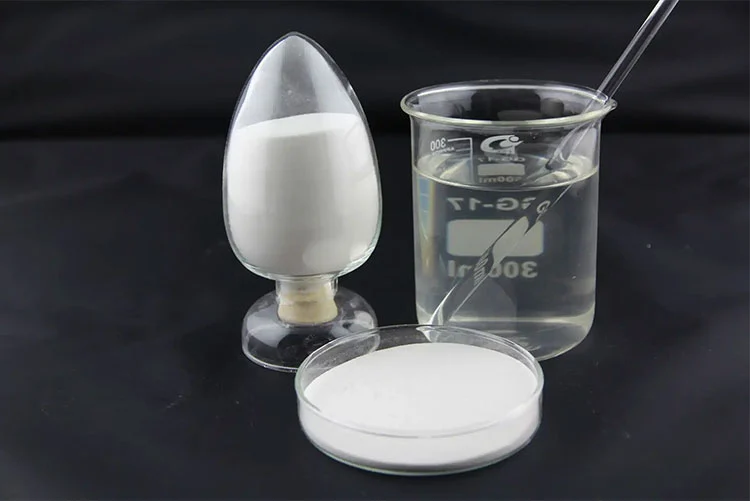
For water-based systems, several preparation techniques may be used depending on the HPMC grade.
Direct Cold-Water Addition
HPMC can be added gradually to cold water under sufficient agitation.
Slow and uniform addition is important because adding a large amount of powder at once can cause agglomeration.
Hot/Cold Water Method
HPMC can first be dispersed in hot water and then hydrated as the mixture cools or as additional cold water is introduced.
This technique takes advantage of HPMC's temperature-dependent hydration behavior and can help achieve better dispersion.
Dry Blending
In some dry-mix applications, HPMC can be pre-blended with other dry ingredients before water is added.
This helps separate individual HPMC particles and can reduce lump formation during hydration.
The best dissolution method depends on the formulation, equipment, HPMC grade, and required processing time.
HPMC Solubility vs. HPMC Dispersibility
Solubility and dispersibility are related, but they are not exactly the same.
Dispersibility describes how well HPMC particles distribute throughout a liquid before complete hydration.
Solubility refers to the formation of a hydrated polymer solution.
This distinction explains why HPMC can sometimes be dispersed in a liquid without immediately producing viscosity.
It also explains why the order of addition and temperature control are important during industrial processing.
Why HPMC Grade Selection Matters
Selecting HPMC only according to viscosity can lead to formulation problems.
A suitable grade should be evaluated according to the complete application requirements, including:
- Required viscosity
- Retenția de apă
- Thickening performance
- Lucrabilitate
- Temperatura gelului
- Dissolution speed
- Surface treatment
- Solvent compatibility
- Application conditions
For example, two HPMC products with similar viscosity specifications may not behave exactly the same during dispersion or hydration if their substitution chemistry or physical characteristics are different.
Common Applications of HPMC
Because of its water solubility, rheology control, film-forming ability, and thermal gelation behavior, HPMC can be used in a wide range of applications.
Depending on the grade, these may include:
- Dry-mix mortars
- Adezivi pentru gresie și faianță
- Chit de perete
- Gypsum-based materials
- Cement-based products
- Coatings
- Detergent and household formulations
- Personal-care formulations
- Pharmaceutical formulations
- Food-related applications for suitable grades
The appropriate HPMC specification should always be selected according to the requirements and regulatory standards of the intended application.
Frequently Asked Questions About HPMC Solubility
Is HPMC soluble in cold water?
Yes. HPMC is generally soluble in cold water and forms a viscous colloidal solution after proper dispersion and complete hydration.
Is HPMC soluble in hot water?
HPMC does not normally dissolve directly in sufficiently hot water like it does in cold water. At elevated temperatures, it can exhibit thermal gelation. The specific behavior and gel temperature depend on the HPMC grade and formulation.
Este HPMC solubil în etanol?
It depends on the grade and ethanol concentration. Many standard water-soluble HPMC grades have limited solubility in high-concentration ethanol, while water/ethanol mixtures may provide better compatibility.
Is HPMC soluble in isopropyl alcohol?
Solubility in high-concentration IPA is generally limited for conventional water-soluble grades. Water-containing IPA systems may provide better hydration depending on the HPMC grade and solvent ratio.
Does HPMC dissolve immediately in water?
No. HPMC requires time to disperse and hydrate. Dissolution speed depends on particle size, grade, concentration, temperature, agitation, and the preparation method.
Why does HPMC form lumps in water?
Lumps can form when the outer surface of HPMC particles hydrates too quickly, trapping dry powder inside. Controlled powder addition and adequate agitation can help prevent this problem.
Does HPMC dissolve after cooling?
HPMC exhibits reversible temperature-dependent behavior. HPMC that has undergone thermal gelation can generally return toward a solution state as the system cools, depending on the formulation and grade.
Concluzie
Understanding HPMC solubility is essential for achieving consistent formulation and processing performance.
In general, HPMC is well known for its cold-water solubility, while elevated temperatures can produce reversible thermal gelation. Its compatibility with ethanol, isopropyl alcohol, methanol, acetone, and other organic solvents depends much more strongly on the specific HPMC grade and solvent composition.
For this reason, an HPMC solubility chart should be used as a practical starting point rather than as a universal specification.
The most reliable approach is to select an HPMC grade according to your actual formulation, required viscosity, processing conditions, solvent system, and end-use performance.
Need Help Choosing the Right HPMC Grade?
Choosing the right HPMC is not only about viscosity. Solubility, hydration speed, water retention, application performance, and processing conditions all need to be considered.
Mikem can help you identify a suitable HPMC grade for your formulation and application requirements.
Whether you are sourcing HPMC for dry-mix mortar, adeziv pentru plăci, chit de perete, acoperiri, or other industrial applications, contact the Mikem team to discuss your requirements.
Contact Mikem today for HPMC product information, technical support, samples, or a quotation.

Postat de Melacolllăsați cuvinte
Bună, sunt Ella, sunt angajată în industria celulozei eterice de 12 ani.

Lasă un răspuns