

Hydroxyethyl cellulose (HEC) is a nonionic water-soluble cellulose ether produced by etherification of alkaline cellulose with ethylene oxide (or chloroethanol). It appears as a white or pale yellow fibrous or powdered solid, odorless and non-toxic, exhibiting multiple excellent properties including thickening, suspension, dispersion, water retention, and film formation. In the coatings industry, particularly within water-based coatings, HEC serves as a core additive widely applied to effectively resolve numerous application and product stability challenges. Its unique advantages have made it an indispensable component in formulations. This article provides a detailed analysis of its application scenarios, core value, and techniques for identifying high-quality products.
I. Applications of Hydroxyethyl Cellulose in Coatings and Core Issues Addressed
By regulating rheological properties, interfacial behavior, and component stability within coating systems, HEC plays a pivotal role across various coatings (emulsion paints, textured paints, stone-effect paints, putties, waterproof coatings, etc.). It precisely addresses industry-wide pain points such as application defects and storage instability.
(1) Optimizing Application Performance to Resolve Staining, Brush Marks, and Other Aesthetic Defects
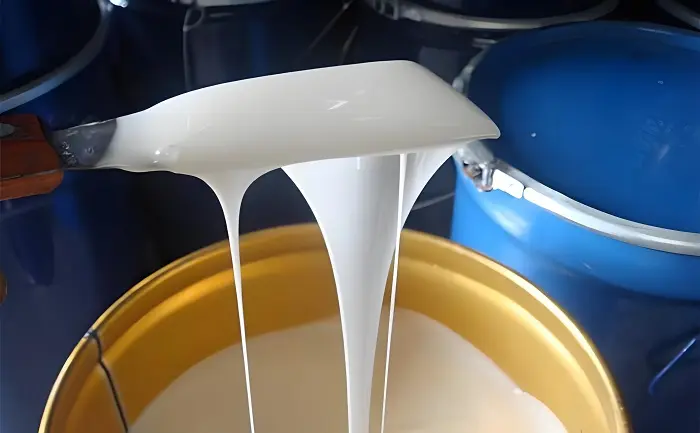
During coating application, issues like sagging (on vertical surfaces), brush/roller marks, and splatter directly impact coating aesthetics. HEC possesses unique thixotropic (shear-thinning) properties: under high shear forces during application, its three-dimensional network structure breaks down, temporarily reducing viscosity to ensure easy brushing/spraying and minimize splatter. After application (when shear force ceases), molecular chains rapidly rebuild the network structure via hydrogen bonding, causing viscosity to rebound swiftly (recovering over 80% of initial viscosity within 5 minutes). This forms a stable wet film that effectively resists gravitational sagging and prevents runs. Simultaneously, Hydroxyethyl cellulose precisely regulates low-shear viscosity (controlled between 500–5000 mPa·s). This ensures sufficient wet film flow to fill application marks while preventing excessive flow that causes uneven coating. Brush and roller marks self-level within 5–10 minutes, significantly enhancing coating smoothness.
(2) Enhancing System Stability to Address Storage Issues like Separation and Sedimentation
During prolonged storage or transportation, pigments and fillers in coatings may settle or agglomerate due to density differences, causing system separation, lumping, and compromised performance. HEC adsorbs onto pigment and filler particle surfaces, forming steric hindrance barriers that prevent particle agglomeration. Its thickening effect also increases overall coating viscosity, inhibiting particle settling and ensuring system uniformity. Furthermore, HEC exhibits excellent biostability, effectively resisting microbial degradation. Combined with its broad pH compatibility (6.0–8.5), it synergizes with various coating components to extend shelf life, ensuring stable physical properties even after months of storage.
(3) Improving Film Formation Quality to Address Issues Like Cracking and Poor Adhesion
During the film formation process of water-based coatings, rapid water evaporation can easily lead to cracking, blistering, and insufficient adhesion. HEC's water retention capacity is twice that of methyl cellulose, effectively slowing evaporation to provide ample time for film formation and preventing defects caused by rapid drying. Simultaneously, HEC forms a uniform, dense protective film during drying, enhancing the coating's hiding power, abrasion resistance, and water resistance. This improves adhesion between the coating and substrate, resulting in a more durable and long-lasting finish. In textured and stone-effect coatings, HEC further improves adhesion to prevent peeling. In waterproof coatings, its dense film effectively blocks moisture penetration, enhancing water resistance.
(4) Adapting to Diverse Applications, Resolving Formulation Compatibility Challenges
Formulations vary significantly across coating types, and ionic additives may react with other components, compromising performance. As a nonionic cellulose ether, HEC exhibits excellent salt solubility and compatibility. It can coexist with a wide range of water-soluble polymers, surfactants, and salts without triggering ionic reactions. This makes it suitable for diverse formulation needs, including emulsion paints, putties, tile adhesives, and synthetic resin polymerization. In synthetic resin polymerization, HEC also functions as a protective colloid, facilitating dispersion and emulsification to aid in producing high-quality polymer materials.

II. Core Advantages of Hydroxyethyl Cellulose in Coatings Applications
Compared to other cellulose ethers (such as methyl cellulose MC and sodium carboxymethyl cellulose CMC) and traditional thickeners, Hydroxyethyl cellulose offers irreplaceable advantages in the coatings field, primarily manifested in the following aspects:
(1) Full-temperature-range solubility, suitable for diverse application environments
Hydroxyethyl cellulose overcomes the limitation of methylcellulose, which dissolves only in cold water. It dissolves rapidly in both cold and hot water, remains stable at high temperatures (below 140°C) or during boiling without precipitation or gelation. This adaptability ensures uniform dissolution across diverse regional and seasonal application conditions—from frigid winters to scorching summers—preventing performance fluctuations caused by temperature variations. Surface-treated HEC can be added directly as a dry powder, effectively preventing caking. Its dissolution rate and viscosity increase are controllable, enhancing construction convenience.
(2) Superior Rheological Properties Balancing Workability and Aesthetics
Hydroxyethyl cellulose aqueous solutions exhibit non-Newtonian behavior with pronounced thixotropy, achieving a balance between “workability flow during application and shape retention at rest.” This ensures smooth brushing or spraying while preventing sagging and splattering, simultaneously enhancing leveling properties to optimize both application efficiency and coating aesthetics. Its wide viscosity range (400–180,000 mPa·s) allows selection of suitable specifications based on coating type (thin liquids, thick pastes), meeting requirements for products like latex paints and thick textured coatings.
(3) Exceptional Compatibility and Stability Extend Product Lifecycle
As a nonionic additive, Hydroxyethyl cellulose maintains stable performance across a broad pH range (6.0–8.5). It exhibits excellent compatibility with pigments, fillers, and emulsions in coatings, preventing flocculation or precipitation reactions. Its superior salt tolerance allows it to withstand high-concentration salt environments, preventing system instability caused by salt presence. Moreover, HEC possesses strong mold resistance and thermal stability, extending paint shelf life and reducing losses during transportation and storage.
(4) Multi-functional and highly efficient, enhancing formulation economics
Hydroxyethyl cellulose integrates multiple functions—thickening, suspension, water retention, film formation, and dispersion—eliminating the need for additional additives and simplifying paint formulations. Its high thickening efficiency requires only 0.1%–0.8% addition (0.1%–0.3% for interior latex paints, 0.3%–0.8% for exterior thick-film coatings) to achieve optimal results, reducing formulation costs while enhancing washability and product competitiveness.
(5) Safe and Eco-Friendly, Aligning with Industry Trends
Hydroxyethyl cellulose is non-toxic, odorless, and non-irritating, meeting environmental standards for water-based coatings. During production, refining processes minimize solvent residues and ash residues, making it suitable for high-end applications like cosmetic-grade and food-grade coatings. This aligns with the current green and eco-friendly development trend in the coatings industry.
View more Hydroxyethyl cellulose in Coatings,Please click here!

III. Practical Methods for Buyers to Identify High-Quality Hydroxyethyl Cellulose
High-quality Hydroxyethyl cellulose must meet characteristics such as high purity, stable performance, and compatibility with coating requirements. Buyers can identify it through four steps—“visual inspection, simple testing, specification verification, and application validation”—to avoid the risk of inferior products.
(1) Initial Screening via Visual Inspection
Premium HEC should appear as a uniform white or pale yellow powder/fibrous solid, free of visible impurities, lumps, and pungent odors (substandard products may exhibit odors or clumping due to insufficient purity). Observe bulk density: high-quality HEC has a bulk density ≥600 g/L, exhibits good flowability when poured, and releases minimal dust. Loose bulk density with excessive dust may indicate moisture content exceeding standards or processing defects.
(2) Simplified Laboratory Testing to Verify Core Performance
Simple tests can rapidly assess Hydroxyethyl cellulose's key properties, suitable for buyer on-site or laboratory implementation:
1. Solubility Test: Take a 1% (by weight) hydroxyethyl cellulose sample, add to room-temperature water, and stir. High-quality HEC should disperse rapidly without noticeable lumps, dissolving completely within 30 minutes to form a transparent, uniform colloidal solution. Slow dissolution, severe lumping, or cloudy solution indicates poor surface treatment or insufficient purity. Heat the solution to 60°C. High-quality HEC solution should remain clear with no precipitation or separation (inferior products may exhibit precipitation due to poor thermal stability).
2. Viscosity Test: Measure viscosity at 1% solution concentration and 25°C using a rotary viscometer (Rotor No. 2, 12 rpm). High-quality HEC viscosity should fall within 50%–150% of the labeled value (e.g., a sample labeled 6000 mPa·s should measure between 3000–9000 mPa·s). Excessive viscosity deviation indicates uneven molecular weight distribution, compromising coating performance stability.
3. Water Retention Test: Mix hydroxyethyl cellulose aqueous solution with coating base material, apply to substrate, and observe drying speed—high-quality HEC significantly delays drying, with no cracking or peeling within 4 hours. Rapid drying or coating cracking indicates poor water retention.
4. Film-forming Test: Pour 1 ml of 1% hydroxyethyl cellulose aqueous solution onto a glass plate. After natural evaporation, high-quality HEC should form a uniform, transparent, and resilient film without cracks or peeling. If the film becomes brittle or peels off, it indicates poor film-forming properties, failing to meet coating requirements.
5. Chemical Identification Test: Take 10 ml of 1% HEC aqueous solution, add 3 ml of dilute acetic acid and 2.5 ml of 10% tannic acid solution. A pale yellow-white flocculent precipitate should form, which dissolves upon addition of dilute ammonia solution. Separately, take 1 mL of a 0.05% aqueous solution, add 1 mL of a 5% aqueous phenol solution and 5 mL of sulfuric acid. After shaking and cooling, the solution should turn orange. Meeting this characteristic indicates a qualified HEC product.
(3) Verify Key Indicators to Ensure Compliance with Standards
Request test reports from suppliers, focusing on verifying the following indicators (in accordance with industry standard requirements):
• Moisture content: ≤5% (ASTM D1347-72 standard). Excessive moisture causes HEC caking, performance instability, and reduced coating shelf life.
• Ash content: High-quality HEC has low ash content (typically ≤1%). Elevated ash indicates impurities that may impair coating compatibility and film quality.
• pH Value: A 1% solution should have a pH between 0 and 8.5. Values outside this range may impair synergistic effects with other coating components;
• Degree of Substitution: Should be controlled between 8 and 2.5. An optimal substitution degree ensures balanced solubility, thickening properties, and stability of HEC.
(4) Scenario Simulation Verification for Practical Application
Add hydroxyethyl cellulose according to actual coating formulation ratios, then conduct small-batch simulated production and application tests:
• Storage Stability: Seal the prepared coating and store for 1–3 months. Observe for separation or sedimentation. Coatings formulated with high-quality HEC should remain uniform.
• Application Performance: Test brush/spray flowability and splatter resistance. Ensure no sagging on vertical surfaces and no visible brush or roller marks post-application;
• Film Quality: Evaluate film smoothness and gloss. Test adhesion and water resistance. High-quality hydroxyethyl cellulose enhances film density and durability, preventing cracking or peeling.
IV. Summary
Hydroxyethyl cellulose (HEC) effectively addresses core issues in the coatings industry—such as application defects, storage instability, and poor film quality—through its superior rheological properties, compatibility, water retention, and film-forming capabilities. Its advantages include full-temperature-range solubility, multifunctionality, and environmental safety, establishing it as a core additive in water-based coating formulations. When selecting HEC, buyers can follow the “visual inspection → simple testing → specification verification → application validation” process to accurately identify high-quality HEC. This ensures compatibility with specific coating product requirements, enhancing overall coating performance and market competitiveness.

Posted by Melacollleave words
Hi, I'm Ella, I have been engaged in the cellulose ether industry for 12 years.

Leave a Reply