

Hydroxyethyl Cellulose (HEC) is a widely used, water-soluble polymer found in many everyday products—from eye drops and shampoos to wall paints and construction materials. Although most consumers never notice it, HEC plays a key role in improving texture, stability, and performance.
So why is hydroxyethyl cellulose so popular across pharmaceuticals, cosmetics, personal care, and coatings? The answer lies in its excellent thickening ability, strong water retention, and outstanding compatibility with other ingredients.
In this guide, you’ll learn what hydroxyethyl cellulose is, how it works, its key properties, common applications in different industries, and how to choose the right hydroxyethyl cellulose supplier for your needs.

What Is Hydroxyethyl Cellulose?
Hydroxyethyl cellulose is a non-ionic, water-soluble cellulose ether derived from natural cellulose, usually sourced from wood pulp or cotton linters.
Chemically, HEC is produced by modifying cellulose with ethylene oxide. This process introduces hydroxyethyl groups into the cellulose structure, improving its solubility and functional performance in water-based systems.
How Hydroxyethyl Cellulose Is Made
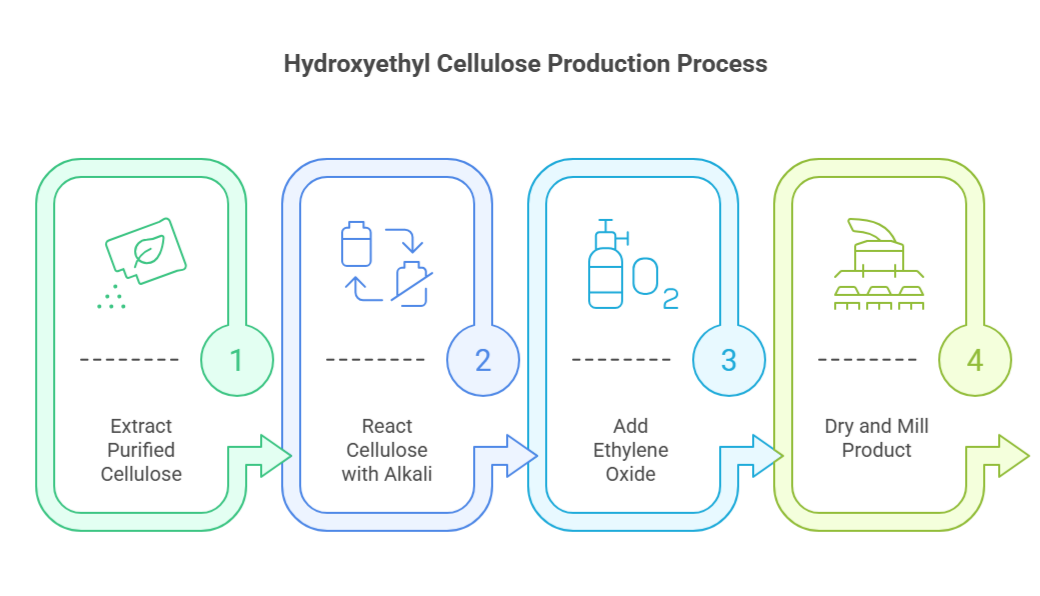
The production process typically involves:
- Extracting purified cellulose from natural plant sources
- Reacting the cellulose with alkali
- Adding ethylene oxide to form hydroxyethyl cellulose
- Drying and milling the final product into a fine powder
The result is a stable, free-flowing powder that dissolves easily in cold or hot water.
Why HEC Is Considered Safe and Versatile?
Because HEC is derived from cellulose and does not carry an electrical charge, it is generally non-toxic, non-irritating, and safe for use in regulated industries like pharmaceuticals and personal care. Its versatility allows it to perform well in both consumer and industrial formulations.
Key Properties of Hydroxyethyl Cellulose
Understanding HEC’s properties helps explain why it is used in so many different products.
1. Thickening and Viscosity Control
HEC is an efficient thickener. Even at low dosages, it can significantly increase viscosity, helping products achieve a smooth, uniform consistency.
2. Water Retention and Binding Ability
Hydroxyethyl cellulose binds water effectively, reducing moisture loss. This is especially important in applications like coatings, cosmetics, and construction materials.
3. Compatibility with Other Ingredients
As a non-ionic polymer, HEC is compatible with:
- Salts and electrolytes
- Surfactants
- Pigments and fillers
- Other polymers and additives
This makes formulation easier and more flexible.
4. Non-Ionic Nature and pH Stability
Unlike ionic thickeners, hydroxyethyl cellulose remains stable across a broad pH range, typically from pH 2 to 12. This stability is crucial in products that may experience pH changes during use or storage.
Hydroxyethyl Cellulose Uses
Hydroxyethyl Cellulose (HEC) is a versatile, water-soluble polymer widely used across pharmaceuticals, personal care, paints, and industrial applications. Its main function is to thicken, stabilize, and control flow, making products easier to use and more reliable in performance.
1. Pharmaceuticals
In the pharmaceutical industry, hydroxyethyl cellulose is commonly used in eye drops and ophthalmic solutions.
- Acts as a viscosity enhancer, helping the liquid stay longer on the eye surface
- Improves lubrication and comfort, reducing dryness and irritation
- Provides good clarity and stability in aqueous formulations
Because it is non-ionic, non-toxic, and gentle, HEC is well suited for sensitive medical applications.
2. Cosmetics & Personal Care Applications
Hydroxyethyl cellulose is widely used in cosmetics and personal care products because it is mild, non-irritating, and easy to formulate. It helps improve texture, stability, and overall product performance without affecting skin or hair comfort.
- Hydroxyethyl Cellulose for Hair Care
In shampoos, conditioners, and hair styling products, hydroxyethyl cellulose works as a gentle thickener. It improves product viscosity and texture, enhances foam stability, and ensures smooth application and easy rinse-off. Because it does not build up on hair, it is ideal for daily-use hair care formulations.
- Hydroxyethyl Cellulose for Skin Care
In skin care products such as creams, lotions, and gels, hydroxyethyl cellulose helps create a smooth, non-sticky feel. It stabilizes emulsions, supports even distribution of active ingredients, and improves moisture retention on the skin. Its gentle nature makes it suitable for sensitive and delicate skin formulations.
- Hydroxyethyl Cellulose in Cosmetics
Cosmetic manufacturers rely on hydroxyethyl cellulose to control viscosity, improve product appearance, and maintain formulation stability during storage. Its versatility and compatibility with various ingredients make it a reliable choice across a wide range of cosmetic and personal care applications.
3. Hydroxyethyl Cellulose for Paint and Coatings
Hydroxyethyl cellulose is widely used in water-based paints and coatings, where it mainly works as a thickener and flow control agent. It helps control how the paint flows, spreads, and settles, making application easier, whether the paint is brushed, rolled, or sprayed.
In water-based paint systems, hydroxyethyl cellulose provides stable viscosity and keeps pigments evenly dispersed. This prevents settling during storage and helps the paint maintain consistent quality over time, improving shelf stability and reliability.
During application, hydroxyethyl cellulose improves leveling and reduces visible brush marks. It also helps prevent sagging on vertical surfaces and improves overall workability, allowing painters to achieve a smoother and more uniform finish.
4. Industrial and Construction Applications
Hydroxyethyl cellulose is widely used in industrial and construction materials to improve consistency, workability, and performance. It helps control water retention and flow behavior, making formulations easier to apply and more stable during use.
Tile Adhesives and Grouts
In tile adhesives and grouts, hydroxyethyl cellulose improves water retention and open time. This allows for better tile positioning, stronger bonding, and more consistent installation quality.
Wall Putty
For wall putty applications, hydroxyethyl cellulose enhances smoothness and spreadability. It helps create a uniform surface, reduces cracking, and improves overall application efficiency.
Cement and Gypsum-Based Mortars
In cement- and gypsum-based mortars, hydroxyethyl cellulose helps regulate water loss and improves workability. This leads to better adhesion, reduced shrinkage, and improved strength development.
Self-Leveling Compounds
In self-leveling compounds, hydroxyethyl cellulose controls flow and viscosity, ensuring even spreading and smooth surfaces. It also helps prevent segregation, resulting in a flat and uniform floor finish.

How to Choose a Hydroxyethyl Cellulose Supplier
Selecting the right hydroxyethyl cellulose supplier is critical for product quality and performance.
Key Factors to Consider:
- Viscosity Grade – Different applications require different viscosity ranges
- Purity – Especially important for pharmaceutical and cosmetic uses
- Batch Consistency – Ensures stable performance over time
A reliable supplier should offer:
- Strict quality control systems
- Technical data sheets and formulation guidance
- Support for grade selection and troubleshooting
Industry Standards and Documentation
Look for suppliers that can provide:
- CAS number documentation
- Safety Data Sheets (SDS)
- Compliance with relevant industry standards
Manufacturers with dedicated QC laboratories are generally better positioned to ensure long-term reliability. MelaColl, which focuses on cellulose ether production, typically emphasizes strict quality inspection and stable supply for coatings, construction, and personal care applications.
FAQs About Hydroxyethyl Cellulose
1. Is hydroxyethyl cellulose safe?
Yes. Hydroxyethyl cellulose is widely regarded as safe when used as directed. It is approved for use in pharmaceuticals, cosmetics, and food-related applications in many regions.
2. What’s Hydroxyethyl Cellulose's CAS Number?
The CAS number for hydroxyethyl cellulose is 9004-62-0.
3. Is hydroxyethyl cellulose natural or synthetic?
HEC is semi-synthetic. It is derived from natural cellulose but chemically modified to improve performance.
4. Can hydroxyethyl cellulose be used in vegan products?
Yes. Because it is plant-based and contains no animal-derived ingredients, hydroxyethyl cellulose is suitable for vegan and cruelty-free products.
5. What’s the difference between HEC and HPMC?
Both are cellulose ethers, but:
- HEC is non-ionic and mainly used in water-based systems
- HPMC has thermal gelation properties and broader pharmaceutical uses
The choice depends on application requirements.
Conclusion
Hydroxyethyl cellulose is a highly versatile ingredient used across pharmaceuticals, cosmetics, paints, and industrial applications. Its excellent thickening ability, water retention, compatibility, and stability make it a reliable choice for both consumer and industrial formulations.
When selecting hydroxyethyl cellulose, choosing the right grade and working with a trusted supplier ensures consistent performance and long-term product quality. With the right formulation approach, HEC can significantly enhance texture, stability, and usability in a wide range of applications.

Posted by Melacollleave words
Hi, I'm Ella, I have been engaged in the cellulose ether industry for 12 years.

Leave a Reply