
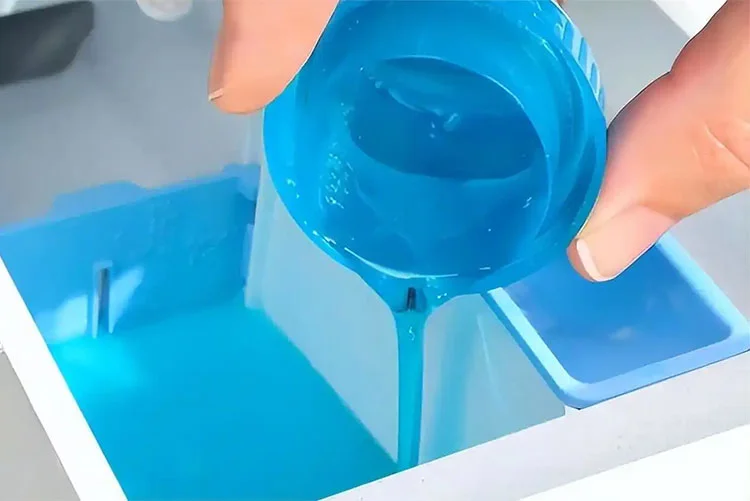
Throughout the development of the detergent industry, issues such as formulation stability, user experience, and sustained cleaning efficacy have remained core challenges for corporate R&D. Hydroxyethyl cellulose (HEC), a nonionic water-soluble polymer derived from natural renewable raw materials, demonstrates irreplaceable advantages in addressing numerous production and application challenges in detergents due to its unique molecular structure and physicochemical properties. From enhancing production efficiency and optimizing user experience to ensuring long-lasting product performance, hydroxyethyl cellulose is emerging as an indispensable “multifunctional additive” in detergent formulations.
Hydroxyethyl cellulose resolves the issues of viscosity instability and phase separation in detergent formulations.
In the production and storage of liquid detergents (such as laundry detergent and dishwashing liquid), viscosity fluctuations, separation, and settling of active ingredients are common quality concerns.
Traditional thickening solutions often rely on blends of inorganic salts and organic thickeners. However, such formulations are highly sensitive to temperature changes—they tend to thin in summer heat and form lumps in winter cold, severely impacting product quality and user experience.
The introduction of hydroxyethyl cellulose has revolutionized this landscape. Its molecular chains, rich in hydroxyl and ether groups, form robust hydrogen bonds with water molecules. Upon rapid water absorption and expansion, these chains intertwine to create a dense three-dimensional network structure. This molecular framework locks in moisture and active ingredients, delivering stable thickening performance.
Research indicates that dishwashing detergents thickened with hydroxyethyl cellulose demonstrate significantly superior viscosity stability across varying temperatures compared to traditional formulations. This ensures consistent viscosity throughout the product's entire lifecycle—from production and storage to use—preventing separation and sedimentation issues.
Moreover, it achieves optimal thickening effects within a low addition range of 0.1% to 1%, preventing excessive viscosity caused by over-addition. This balance ensures both product flowability and controllable application performance.
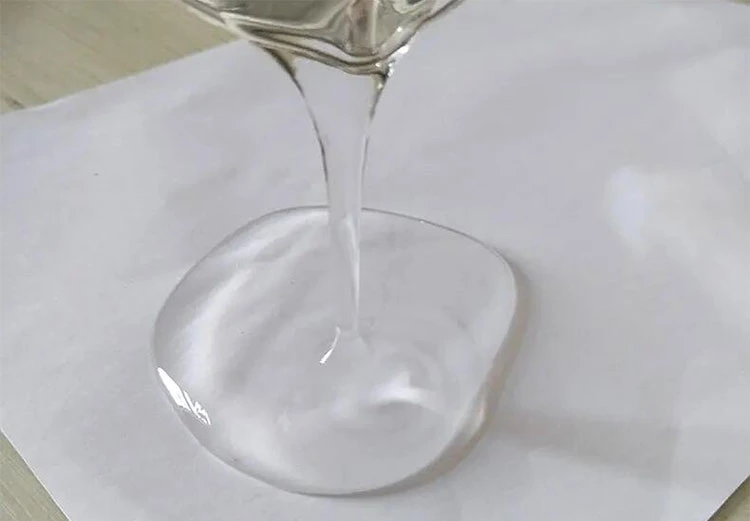
Hydroxyethyl cellulose effectively solves the industry-wide challenge of active ingredients in detergents being prone to deactivation.
The high cleaning efficacy of modern detergents relies on the synergistic action of active ingredients such as surfactants, enzymes, and fluorescent whitening agents. However, these components are highly susceptible to environmental factors that can compromise their effectiveness. For instance, surfactants in hard water environments are susceptible to disruption of their micelle structures by calcium and magnesium ions, leading to diminished cleaning power. Enzymes (such as proteases and lipases) are sensitive to temperature and pH levels; high temperatures or pH fluctuations can damage their spatial structures, causing inactivation. Fluorescent whitening agents, meanwhile, are prone to inactivation due to oxidation and uneven dispersion.
Hydroxyethyl cellulose constructs a “protective barrier” for active ingredients through multiple mechanisms:
First, its molecular chains can encapsulate surfactant micelles, preventing electrolytes from disrupting the micelle structure. This enhances the surfactant's resistance to salt precipitation and high temperatures, ensuring stable cleaning performance across varying water qualities and temperatures.
Second, its polar groups adsorb H⁺ or OH⁻ ions within the system, mitigating drastic pH fluctuations to maintain an optimal environment for enzyme activity. Simultaneously, its three-dimensional network structure encapsulates enzyme molecules, reducing direct contact with metal ions, lowering the probability of oxidative inactivation, and extending the enzyme's half-life.
Third, for functional components like fluorescent whitening agents and fragrances, hydroxyethyl cellulose prevents oxidative degradation by adsorbing and encapsulating these substances, shielding them from oxygen exposure. It also promotes uniform dispersion, ensuring long-term stability of whitening and fragrance retention functions in the product.

To learn about the use of hydroxyethyl cellulose in detergents, click here.
Hydroxyethyl cellulose successfully addresses the pain points of stain redeposition and yellowing or graying of garments.
During the laundry process, if stain particles stripped away by surfactants are not promptly removed by water, they readily reattach to fiber surfaces. This causes garments to appear increasingly dull and yellowed with repeated washing, a problem particularly noticeable in natural fibers like cotton and linen.
Although hydroxyethyl cellulose does not directly participate in stain removal, it achieves anti-redeposition functionality through charge regulation and encapsulation. After its molecular chains adsorb onto the fabric surface, they impart a negative charge to the fibers. Since stain particles typically carry a negative charge as well, the repulsive charge barrier effect prevents these particles from reattaching to the fibers.
Simultaneously, its molecular chains encapsulate dispersed stain particles, forming stable colloidal solutions that are efficiently flushed away with wash water. This fundamentally prevents stain redeposition, preserving the whiteness and brightness of garments. This functionality not only enhances cleaning efficacy but also reduces fabric wear, extending the lifespan of clothing.
Hydroxyethyl cellulose also enhances the production efficiency and environmental compatibility of detergents.
In traditional detergent production, certain thickeners require slow dissolution under specific temperature conditions, prolonging the production cycle. Hydroxyethyl cellulose, however, dissolves rapidly in both cold and hot water without requiring special temperature control, significantly accelerating the production process and enhancing efficiency.
Additionally, its raw materials are derived from renewable natural plant extracts, offering excellent biodegradability. Compared to synthetic polymer additives, it imposes a lower burden on aquatic environments, aligning with the modern detergent industry's green and eco-friendly development trends. Its outstanding surfactant compatibility also reduces the usage of other additives in formulations, simplifying the formulation system while lowering production energy consumption and costs.

In optimizing foam stability, hydroxyethyl cellulose also plays a significant role.
Consumers typically associate rich foam with strong cleaning power, and high-quality foam must be fine, dense, and long-lasting.
Although hydroxyethyl cellulose has weak foaming properties on its own, it synergizes with surfactants in the system. It adsorbs onto the surface of the foam liquid film to form an elastic protective layer. Through steric hindrance, it prevents rapid water loss from the liquid film, delays thinning and rupture, and extends foam longevity.
Simultaneously, it modulates the system's surface tension, promoting uniform foam distribution. This prevents rapid collapse of large bubbles and sparse formation of small bubbles, resulting in finer, more stable foam that enhances the user experience during the cleaning process.
Melacoll Hydroxyethyl cellulose manufacturer
Hydroxyethyl cellulose (HEC), as one of Melacoll's core products, plays a vital role across multiple industries—from construction mortars to household detergents, textiles, papermaking, and oil drilling. In household detergents, our HEC not only thickens formulations and improves viscosity in washing solutions but also enhances dispersion and foam stability. It maintains exceptional stability within a pH range of 6-8, a key factor in customer selection. For more detergent applications, please visit: Detergents.

In summary, hydroxyethyl cellulose has successfully addressed long-standing challenges in the detergent industry—such as viscosity instability, active ingredient deactivation, and yellowing/graying of fabrics—through its multifunctional properties: thickening stability, active ingredient protection, stain redeposition prevention, and production efficiency enhancement. As consumer demands for detergent performance, user experience, and environmental sustainability continue to rise, hydroxyethyl cellulose will see increasingly widespread application in detergent formulations.

Posted by Melacollleave words
Hi, I'm Ella, I have been engaged in the cellulose ether industry for 12 years.

Leave a Reply