
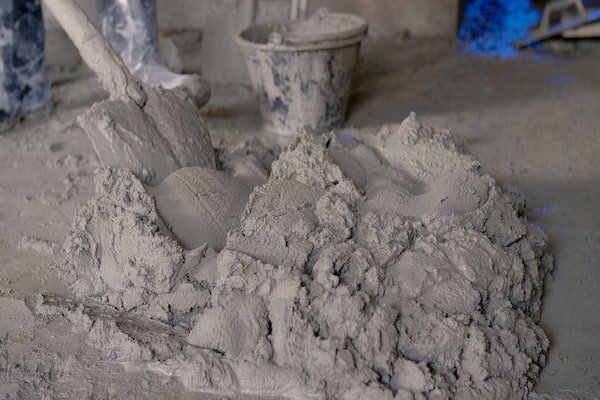
Dry-mix mortar has become one of the most important materials in modern construction. It is widely used in applications such as tile adhesives, rendering mortar, plastering mortar, self-leveling compounds, and exterior insulation systems. Compared with traditional site-mixed mortar, dry-mix mortar offers more consistent quality and better performance.
However, to achieve good workability and stability, dry-mix mortars usually require functional additives. One of the most essential additives is hydroxypropyl methylcellulose, commonly known as HPMC.
HPMC belongs to the family of cellulose ethers, which are water-soluble polymers derived from natural cellulose. It significantly improves mortar workability and water retention, making it an almost indispensable component in dry-mix mortar formulations.
In this article, we will explain in simple terms what HPMC is, how it works in dry-mix mortar, and why it is widely used in modern building materials.
What Is Hydroxypropyl Methylcellulose (HPMC)?
Hydroxypropyl methylcellulose (HPMC) is a non-ionic cellulose ether produced by chemically modifying natural cellulose. The final product is a white or off-white powder that dissolves in water to form a stable solution.
When mixed with water, HPMC creates a viscous and stable polymer solution. This property allows it to modify the behavior of cement-based materials.
In construction materials, HPMC mainly provides three important functions:
- Water retention
- Thickening
- Improved workability
Because of these properties, HPMC is widely used in many building products, including:
- Dry-mix mortar
- Tile adhesive
- Wall putty
- Rendering mortar
- Self-leveling compounds
- EIFS / ETICS insulation systems
Even though the dosage is usually very small (often less than 1%), its effect on mortar performance can be significant.

Why Dry-Mix Mortar Needs Additives
Without additives, cement-based mortar can have several practical problems during construction.
For example:
- Mortar may lose water too quickly when applied on a dry surface.
- The mixture may separate or bleed water.
- Workability may be poor, making application difficult.
- Adhesion to substrates may not be strong enough.
Cellulose ethers like HPMC help solve these issues by modifying the internal structure of the mortar mixture.
As a result, the mortar becomes easier to apply, more stable, and more reliable in real construction environments.
How HPMC Improves Mortar Workability
One of the most noticeable effects of HPMC is the improvement of mortar workability.
Workability refers to how easy the mortar is to mix, spread, and apply during construction. Good workability allows workers to apply mortar smoothly without excessive effort.
When HPMC is added to mortar, it dissolves in water and forms a polymer network within the mixture. This network helps distribute water more evenly throughout the mortar.
As a result, the mixture becomes:
- smoother
- easier to spread
- more stable during application
In some cases, a small amount of HPMC can even slightly improve the flow of mortar because tiny air bubbles created by the polymer act like microscopic ball bearings, helping particles move more easily.
However, if too much HPMC is used, the mortar may become overly thick. This is why manufacturers carefully control the dosage during formulation.
HPMC Significantly Improves Water Retention
One of the most important roles of HPMC in mortar is water retention.
When mortar is applied to porous surfaces such as bricks or concrete blocks, the substrate can quickly absorb water from the mixture. If water is lost too fast, the cement does not have enough time to fully hydrate.
This can lead to several problems:
- reduced strength
- poor adhesion
- surface cracking
- difficult application
HPMC helps prevent these issues by locking water inside the mortar.
When HPMC absorbs water, it forms a gel-like structure that slows down the movement of water through the mortar. This keeps the mixture moist for a longer period, allowing the cement hydration process to proceed more effectively.
Good water retention is particularly important for applications such as:
- tile adhesives
- thin-layer mortars
- plastering mortars
- exterior insulation systems
In these systems, maintaining sufficient moisture during curing is critical for long-term performance.
The Effect of HPMC on Mortar Strength
While HPMC improves workability and water retention, it can also affect the mechanical strength of mortar.
In general, adding HPMC may slightly reduce compressive and flexural strength. This happens mainly for two reasons.
First, HPMC can introduce small amounts of air bubbles into the mortar. These bubbles help improve workability but may reduce density slightly.
Second, HPMC forms a thin polymer film around cement particles. This film can slow down the hydration process in the early stages.
However, this strength reduction does not necessarily mean poorer performance in practical applications.
In many construction materials, improving flexibility and crack resistance can be just as important as achieving maximum strength.
Therefore, mortar formulations are usually designed to balance workability, flexibility, and strength.
HPMC Helps Improve Mortar Flexibility
Another advantage of adding HPMC is improved flexibility.
Cement-based materials are naturally brittle. Under stress or environmental changes, they can easily crack.
HPMC helps improve flexibility in two ways.
First, as a polymer material, HPMC can form a thin film structure inside the hardened mortar. This film helps the material absorb stress and reduces brittle failure.
Second, the small air bubbles introduced by HPMC can act as stress-relief points within the structure. These bubbles help distribute internal stresses more evenly.
Because of these effects, mortars containing HPMC are often better at resisting cracking.
This is particularly important in systems exposed to:
- temperature changes
- substrate movement
- drying shrinkage
How HPMC Affects Cement Hydration
Cement hardens through a chemical reaction called hydration. During this process, cement reacts with water to form new crystalline and gel-like structures that give the material its strength.
When HPMC is added to mortar, it can slightly slow down the hydration process.
This happens because HPMC molecules may adsorb onto the surface of cement particles, creating a temporary barrier between cement and water.
As a result:
- the early hydration reaction is delayed
- the setting time becomes longer
- the workable time of mortar increases
For construction workers, this delay can actually be beneficial because it provides more time for mixing, transporting, and applying the mortar.
Importantly, HPMC does not change the final types of hydration products produced by cement. The cement will still form the same hydration compounds once the reaction progresses.
The Mechanism of HPMC in Mortar
The performance improvements provided by HPMC come from several combined mechanisms.
1. Formation of a Polymer Network
HPMC molecules interact with each other to form a network structure in the mortar. This increases viscosity and improves cohesion.
2. Water Absorption and Gel Formation
HPMC absorbs water and forms a gel-like structure that slows down water movement and improves water retention.
3. Surface Adsorption
HPMC molecules can adsorb onto cement particles, influencing hydration and improving mixture stability.
4. Air-Entraining Effect
HPMC can introduce small, evenly distributed air bubbles into the mortar, improving workability and flexibility.
Together, these mechanisms explain why HPMC is such an effective additive in dry-mix mortar formulations.
Why HPMC Is Essential in Modern Dry-Mix Mortars
Today, most high-performance dry-mix mortars rely on HPMC to achieve consistent quality.
By adding a small amount of HPMC, manufacturers can significantly improve:
- water retention
- workability
- adhesion performance
- crack resistance
- construction efficiency
Because of these benefits, HPMC has become a standard ingredient in many modern building materials.
Frequently Asked Questions About HPMC in Dry Mix Mortar
1. Does HPMC affect mortar strength?
Yes, adding HPMC may slightly reduce compressive strength because it introduces small air bubbles and slows early cement hydration. However, it improves flexibility, workability, and crack resistance, which are important for many construction applications.
2. How much HPMC is typically used in mortar?
The dosage of HPMC in mortar formulations is usually small, often between 0.1% and 0.5% of the dry mix, depending on the product type and required performance.
Conclusion
Hydroxypropyl methylcellulose (HPMC) plays a vital role in improving the performance of dry-mix mortar. Although it is used in small quantities, it can greatly influence how mortar behaves during mixing, application, and curing.
By improving water retention, enhancing workability, and increasing flexibility, HPMC helps ensure that mortar performs reliably in real construction environments.
For manufacturers of dry-mix mortar, tile adhesives, and other cement-based materials, choosing the right HPMC type and dosage is essential for achieving the best balance between performance and cost.
As construction technology continues to evolve, HPMC will remain a key ingredient in the development of high-quality and durable building materials.

Posted by Melacollleave words
Hi, I'm Ella, I have been engaged in the cellulose ether industry for 12 years.

Leave a Reply