
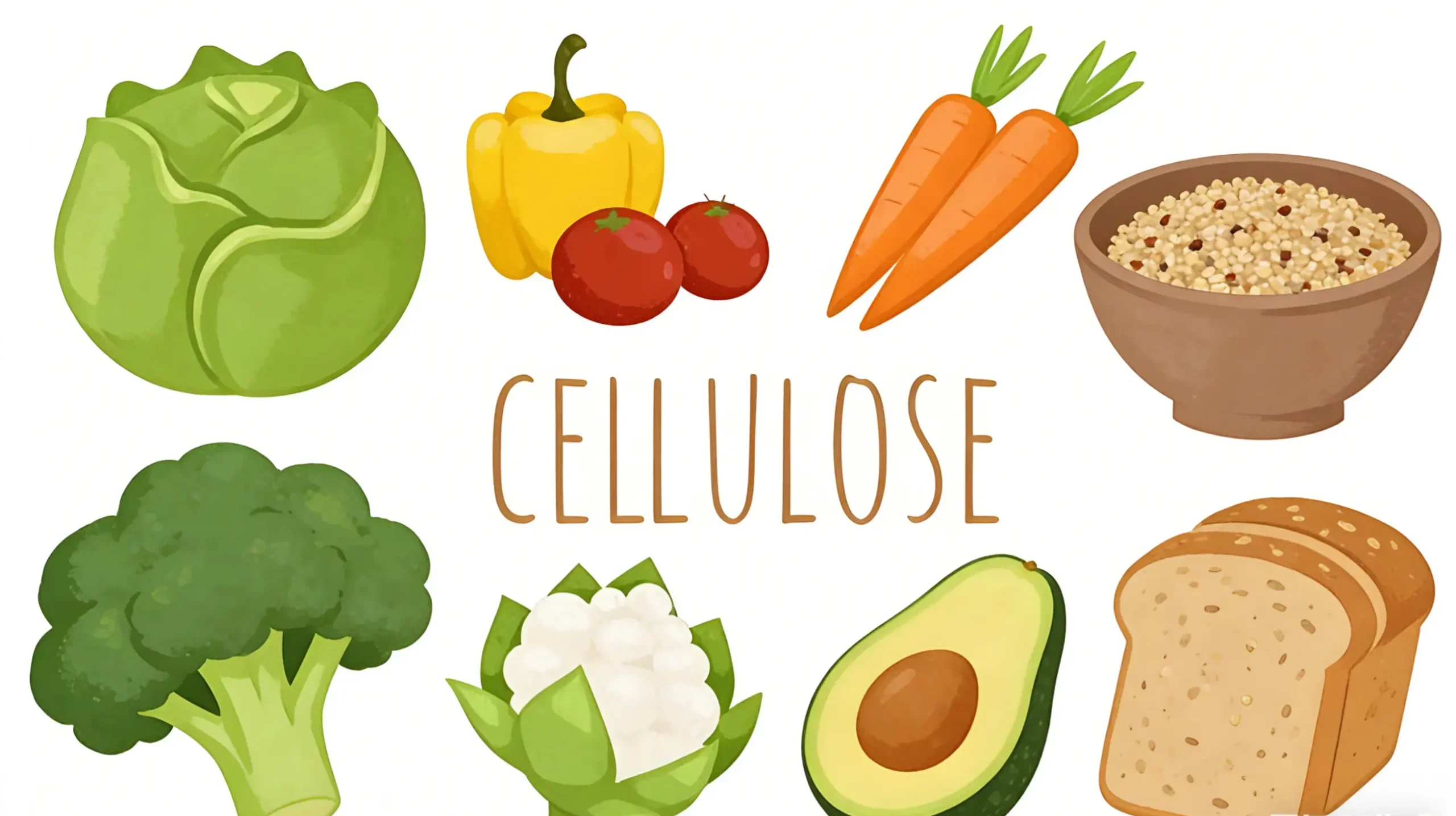
If you’ve ever checked an ingredient label and spotted “cellulose,” you might have paused for a second. Isn’t that… plant fiber? Why is it in ice cream, bread, or even salad dressing?
The short answer: cellulose is one of the most useful and underrated ingredients in modern food.
It doesn’t just sit there doing nothing. It helps foods stay creamy, fresh, stable, and even healthier. In fact, many of the textures and qualities we expect in food today wouldn’t be possible without it.
Below, we will take a systematic look at the true role of cellulose in food from multiple perspectives.
What Is Cellulose in Food?
Cellulose is a natural substance found in plants. Think of it as the “framework” that gives plants their shape—kind of like the steel structure inside a building.
From a scientific point of view, it’s made of long chains of glucose molecules. But here’s the interesting part: unlike starch, your body can’t digest cellulose.
So why eat it?
Because it still plays two important roles:
First, it works as dietary fiber. Even though your body doesn’t absorb it, cellulose helps keep your digestive system moving. It adds bulk, supports gut health, and is one reason why vegetables and whole grains are so good for you.
Second, it’s widely used as a functional food ingredient. Food manufacturers extract and refine cellulose into forms like microcrystalline cellulose or carboxymethyl cellulose (CMC). These ingredients don’t add calories—but they do a lot behind the scenes.
In simple terms: cellulose helps food feel better, look better, and last longer.
What is cellulose made of?
Cellulose is made of glucose, which is a simple sugar. More specifically, it consists of long chains of glucose molecules linked together, kind of like a chain made of many identical links.
The key difference between cellulose and other glucose-based substances (like starch) lies in how those glucose units are connected. In cellulose, the bonds are arranged in a way that makes the chains very straight and strong, allowing them to pack tightly together. This is what gives plants their firm structure.
Even though cellulose is built from sugar, our bodies cannot break those special bonds. So while it's made of the same building blocks as digestible carbohydrates, it passes through our system unchanged — which is exactly why it works so well as dietary fiber and as a low-calorie food ingredient.
How Cellulose Improves Texture and Structure
In food processing, one of the core functions of cellulose and its derivatives (such as HPMC, CMC, etc.) is to “shape food structure.”
It can regulate the gelling properties of food. Simply put, by adjusting the amount or type of cellulose added, food manufacturers can control the elasticity of jellies, the thickness of yogurt, and even the “fibrous texture” of plant-based meat. This makes the product’s texture more closely align with consumer expectations.
At the same time, cellulose is a highly effective thickener and stabilizer. It increases the viscosity of food systems, preventing separation in beverages, sedimentation in sauces, or water separation in dairy products, resulting in a more uniform and refined appearance.
Furthermore, it possesses excellent water-retention capabilities. For example, in bread or cakes, cellulose reduces moisture loss, helping products remain soft during storage and preventing them from drying out or becoming hard.
Cellulose: A Key Ingredient in Low-Fat and Low-Sugar Foods
As more people look for healthier options, food companies are under pressure to reduce fat, sugar, and carbs—without ruining taste.
This is where cellulose really shines.
1. Fat Replacement
Cellulose contains almost no calories (around 0–2 kcal per gram), but it can mimic the texture of fat.
For example:
- In low-fat ice cream, it helps create a creamy mouthfeel while also preventing ice crystals
- In processed meats like sausages, it helps retain juiciness even with less fat
So you get a similar experience—just with fewer calories.
2. Sugar Reduction
Removing sugar isn’t easy. Sugar doesn’t just make things sweet—it also affects structure and volume.
Cellulose acts as a bulking agent, helping maintain texture when sugar is reduced.
In products like low-sugar cookies or chocolate:
- It helps keep the product from collapsing
- It supports the right bite and consistency
- It works alongside sweeteners like erythritol or stevia
3. Lower Carb Formulations
Since cellulose isn’t digested, it doesn’t count as usable carbs.
That makes it ideal for:
- Low-carb bread
- Keto-friendly snacks
- Functional nutrition bars
It can reduce net carbs while increasing fullness, which is great for weight management or blood sugar control.

The Multiple Functions of Cellulose as a Food Additive
In food formulations, cellulose is like a multitool. It does a bit of everything.
1. Stabilizer and Suspension Agent
As a stabilizer and suspending agent, it prevents sedimentation and ensures product uniformity. Cellulose and its derivatives can keep particles suspended in beverages and condiments, preventing them from settling at the bottom of the bottle or separating into layers. For example, adding a small amount of carboxymethyl cellulose (CMC) to orange juice drinks containing fruit pulp ensures the pulp is evenly distributed throughout the bottle rather than accumulating at the bottom.
2. Water Absorbing Agent
As a water-absorbing and water-retaining agent, it locks in moisture, making food more moist. The structure of cellulose is sponge-like, allowing it to absorb and retain large amounts of water. Adding a small amount of microcrystalline cellulose to low-fat chicken sausages significantly reduces juice loss during cooking, resulting in a juicier and more tender texture; adding cellulose to bread or cakes also slows down the drying and hardening process, maintaining a soft and fluffy texture for longer.
3. Filler and Bulking Agent
As a filler and bulking agent, it increases volume and reduces costs. Cellulose can serve as a filler to enhance food volume and texture while helping to control costs. For example, in imitation crab sticks, cellulose is used to provide structure and improve texture; in some cereal bars or puffed snacks, adding an appropriate amount of cellulose maintains the product’s size while increasing dietary fiber content—achieving two goals at once.
4. Shelf-Life Support
In some applications, cellulose can help slow spoilage.
For example, edible coatings made with cellulose can be applied to fresh-cut fruits to:
- Reduce browning
- Limit microbial growth
- Extend freshness
Cellulose in Food Preservation and Packaging
Cellulose isn’t just used inside food—it’s also used around it.
First is its ability to absorb and retain water. By regulating the moisture environment on the surface of food, cellulose can inhibit microbial growth, thereby delaying spoilage.
Second, cellulose materials possess excellent oxygen barrier properties. They can reduce oxygen penetration into food, slowing down the rate of oxidative reactions—such as preventing lipid rancidity or color changes.
In terms of packaging, cellulose also offers high mechanical strength, protecting food from compression or damage during transportation and storage. More importantly, it is derived from natural sources and is cost-effective, making it a preservation material that combines both economic and environmental benefits.

Why Is Cellulose So Widely Used?
At this point, you might be wondering: why is cellulose everywhere?
The answer is simple.
It’s affordable, versatile, and sustainable.
Cellulose comes from abundant natural sources like wood, cotton, corn husks, and wheat bran. It’s easy to process and doesn’t significantly increase production costs.
At the same time, it’s environmentally friendly. It breaks down naturally and doesn’t create harmful waste like many synthetic materials.
But perhaps the biggest advantage is this:
Cellulose often solves multiple problems at once.
In one ingredient, it can:
- Improve texture
- Replace fat or sugar
- Stabilize structure
- Extend shelf life
- Add dietary fiber
That’s why food developers rely on it so heavily.
Final Thoughts
Cellulose might not sound exciting—but it plays a huge role in the food we eat every day.
It helps make foods healthier without sacrificing taste. It improves texture, extends shelf life, and supports modern trends like low-fat, low-sugar, and clean-label products.
And as food technology continues to move forward, cellulose is likely to become even more important—from sustainable packaging to advanced nutrition delivery.
In a way, it’s the quiet hero of the food industry.

Posted by Melacollleave words
Hi, I'm Ella, I have been engaged in the cellulose ether industry for 12 years.

Leave a Reply