
In the modern construction industry, the idea of a "one-size-fits-all" mortar is a myth. Different climates, substrates, and building standards demand highly specific performance criteria. For dry mix mortar manufacturers, relying on generic formulas can lead to inconsistent product quality, unhappy contractors, and wasted materials.
To stay competitive, you need custom dry mix mortar formulations tailored to exact project requirements. Whether you are producing high-performance tile adhesives, durable exterior insulation systems, or flawless self-leveling floors, the secret lies in choosing the right dry mix mortar additives.
In this guide, we will explore how to adjust your formulations for various applications, the role of key additives, and how partnering with reliable construction chemical suppliers like Melacoll can elevate your product line.
Why Customizing Your Dry Mix Mortar Formulation Matters
For procurement managers and technical directors, formulating mortar is a delicate balance between performance and budget. Customization provides two massive business advantages:
Ensuring Project Quality and Durability
Construction environments vary wildly. A mortar applied in the scorching heat of the Middle East requires vastly different water retention capabilities than one used in the damp, cold climates of Northern Europe. Customizing your formulation ensures your product maintains excellent workability, strong adhesion, and long-term durability, regardless of external conditions.
Cost-Efficiency and Material Optimization
Over-engineering a formulation is a common mistake that eats into your profit margins. By customizing your mix, you can optimize the dosage of expensive additives. You achieve the exact performance specifications required by your clients without paying for unnecessary chemical enhancements, significantly improving your cost-efficiency.
Tailoring Formulations for Key Construction Applications
Different applications demand wildly different physical properties and adherence to strict international standards (like EN 12004 for tile adhesives). Generic mixes simply cannot hit these precise metrics. Here is how you can optimize formulations for three major applications using Melacoll’s high-performance additives:
1. High-Performance Tile Adhesives (C1 / C2 Grades)
Modern construction increasingly relies on large-format, low-porosity tiles (like porcelain) applied to challenging substrates. To meet C2TE or C2TES1 classifications, your adhesive needs exceptional slip resistance and a long open time.
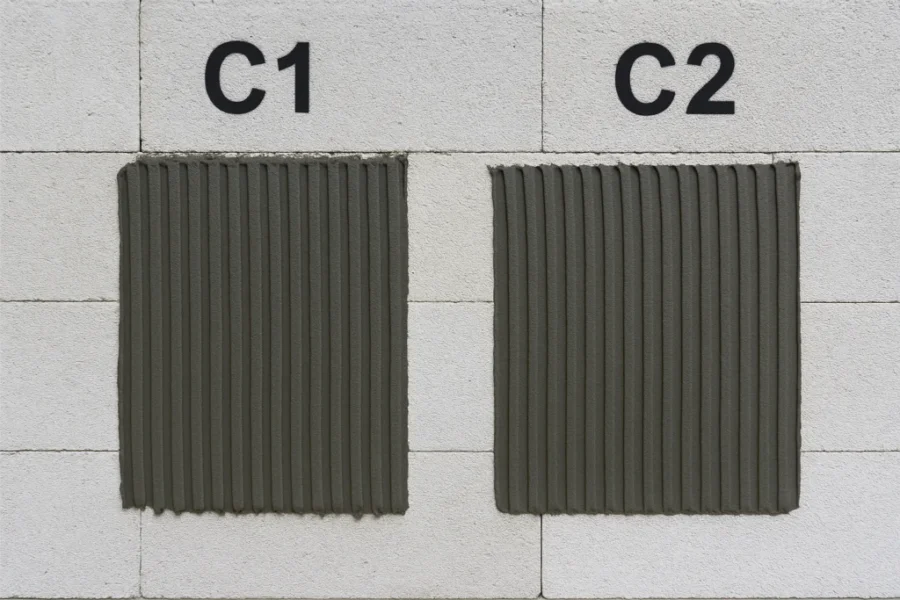
- The Data-Driven Goal: Achieve a tensile adhesion strength of ≥ 1.0 MPa (after water immersion and heat aging) and an open time of at least 30 minutes.
- The Melacoll Solution: By incorporating specialized grades of Melacoll™ HPMC for tile adhesive, you create a powerful water-retention barrier. This prevents premature water loss to the substrate, extending the open time by up to 20-30% compared to generic alternatives. Furthermore, adding Melacoll™ RDP ensures maximum sag resistance (slip < 0.5 mm), allowing heavy tiles to be installed top-down without slipping, while massively boosting the final bond strength.
| Ingredients | Function | Recommended Dosage (%) |
| Portland Cement (OPC 42.5R) | Primary Binder | 35.0 - 40.0 |
| Silica Sand (0.1 - 0.3mm) | Aggregate/Filler | 55.0 - 60.0 |
| Calcium Carbonate (Heavy) | Filler | 3.0 - 5.0 |
| Melacoll™ HPMC (High Viscosity) | Water Retention & Open Time Extension | 0.25 - 0.35 |
| Melacoll™ RDP Polymer Powder | Boosts Bond Strength & Flexibility | 2.0 - 3.0 |
| Starch Ether | Anti-slip / Sag Resistance | 0.05 |
| Calcium Formate | Early Strength Accelerator | 0.3 - 0.5 |
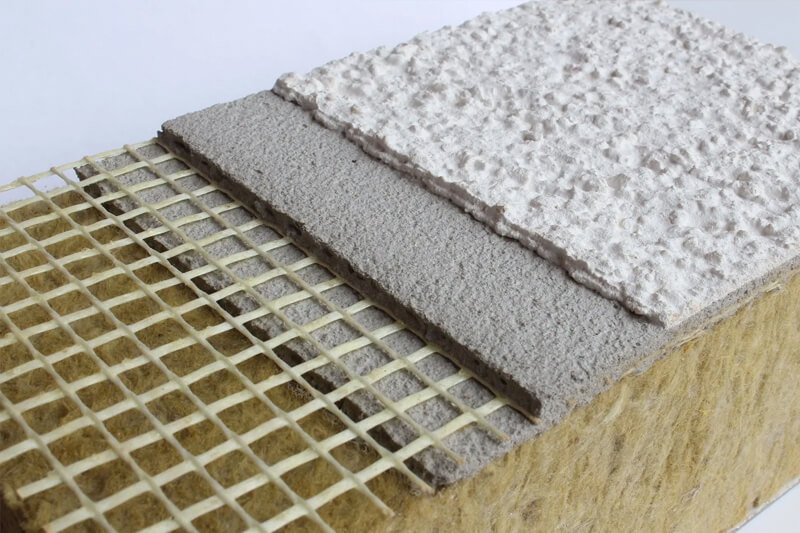
2. ETICS/EIFS (Exterior Insulation and Finish Systems)
Exterior insulation systems are subjected to severe weathering, thermal expansion, and structural shifts. A traditional, rigid cement mortar will inevitably crack, leading to water ingress and system failure.
- The Data-Driven Goal: Transform the brittle cement matrix into a highly flexible shield that achieves a bond strength of ≥ 0.1 MPa on EPS/XPS insulation boards (ensuring the board breaks before the adhesive fails) and passes stringent impact resistance tests (e.g., 3 Joules to 10 Joules).
- The Melacoll Solution: This is where customization is critical. By dialing in the precise dosage of Melacoll™ RDP polymer powder in ETICS mortars, you introduce a flexible polymeric network within the cement. This absorbs thermal stress, prevents micro-cracking, and guarantees permanent adhesion to smooth, hydrophobic insulation boards. When paired with our high-viscosity Melacoll™ MHEC, the mortar gains the perfect consistency for easy troweling.
| Ingredients | Function | Recommended Dosage (%) |
| Portland Cement (OPC 42.5R) | Primary Binder | 30.0 - 35.0 |
| Silica Sand (0.1 - 0.5mm) | Aggregate | 50.0 - 60.0 |
| Calcium Carbonate | Filler | 5.0 - 10.0 |
| Melacoll™ MHEC (Med-High Viscosity) | Workability & Moisture Control | 0.15 - 0.25 |
| Melacoll™ RDP Polymer Powder | High Flexibility & Adhesion to EPS/XPS | 2.5 - 4.0 |
| Wood Fiber | Crack Resistance | 0.3 - 0.5 |
| Polypropylene (PP) Fiber | Prevents Micro-shrinkage Cracks | 0.1 |
3. Self-Leveling Compounds (SLC)
Formulating self-leveling compounds is one of the most technically demanding tasks. The mortar must flow effortlessly to create a mirror-flat surface, yet it must cure rapidly without aggregate segregation or water bleeding.
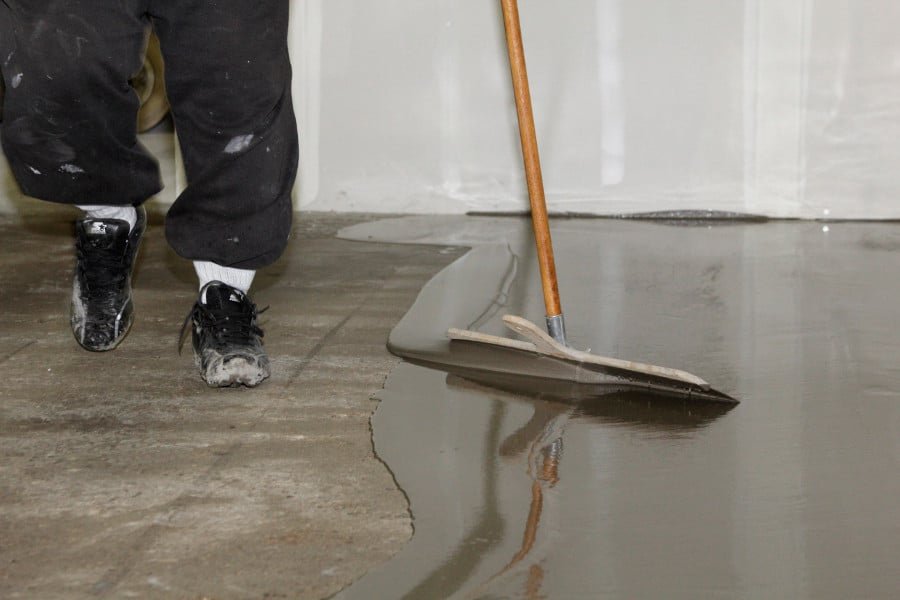
- The Data-Driven Goal: Maintain excellent flowability for 20-30 minutes after mixing, while achieving a rapid 24-hour compressive strength of ≥ 15 MPa (and a final strength of >25 MPa) without any surface defects or dusting.
- The Melacoll Solution: Achieving this delicate rheological balance requires highly customized dry mix mortar additives. Using low-viscosity grades of Melacoll™ Cellulose Ethers acts as a powerful stabilizing agent. It prevents heavy aggregates from sinking and stops water from bleeding to the top, ensuring a perfectly homogenous, defect-free surface. It works synergistically with your superplasticizers to maintain high fluidity without sacrificing curing time.
| Ingredients | Function | Recommended Dosage (%) |
| High Alumina Cement (HAC) | Rapid Setting / Early Strength | 10.0 - 15.0 |
| Portland Cement (OPC 42.5R) | Base Strength | 15.0 - 20.0 |
| Calcium Sulfate (Anhydrite) | Expansion Control | 5.0 - 8.0 |
| Silica Sand (0.1 - 0.4mm) | Aggregate | 40.0 - 50.0 |
| Calcium Carbonate | Filler | 10.0 - 15.0 |
| Melacoll™ HPMC (Low Viscosity) | Prevents Segregation & Bleeding | 0.05 - 0.1 |
| Melacoll™ RDP Polymer Powder | Abrasion Resistance & Flexural Strength | 1.5 - 2.5 |
| Superplasticizer (PCE based) | Enhances Flowability | 0.2 - 0.4 |
| Defoamer (Powder) | Eliminates Air Bubbles / Pinholes | 0.1 - 0.2 |
| Tartaric Acid | Setting Retarder | 0.05 - 0.15 |
Why Choose Melacoll as Your Additive Supplier?
Understanding how to customize a formulation is only half the battle; the other half is sourcing high-quality, consistent raw materials. B2B buyers trust Melacoll because we deliver more than just chemicals—we deliver reliability.
- Uncompromising Quality Control: We utilize advanced manufacturing processes to ensure every batch of our HPMC, MHEC, and RDP meets strict international standards. Consistency in our plant means consistency in yours.
- Supply Chain Stability: We know that delayed shipments halt your production lines. Melacoll guarantees robust production capacity and efficient global logistics to keep your business running smoothly.
- Expert Technical Support: We don't just sell products; we solve problems. Our state-of-the-art laboratory and experienced technicians are available to help you test, adjust, and perfect your custom formulations for maximum market impact.
Get Started with Melacoll Today
Upgrading your dry mix mortar formulations shouldn't be a guessing game.
Partner with a supplier who understands your industry, respects your bottom line, and delivers uncompromising quality.
Contact Melacoll today to get free additive samples and expert technical support for your formulations.

Posted by Melacollleave words
Hi, I'm Ella, I have been engaged in the cellulose ether industry for 12 years.

Leave a Reply