
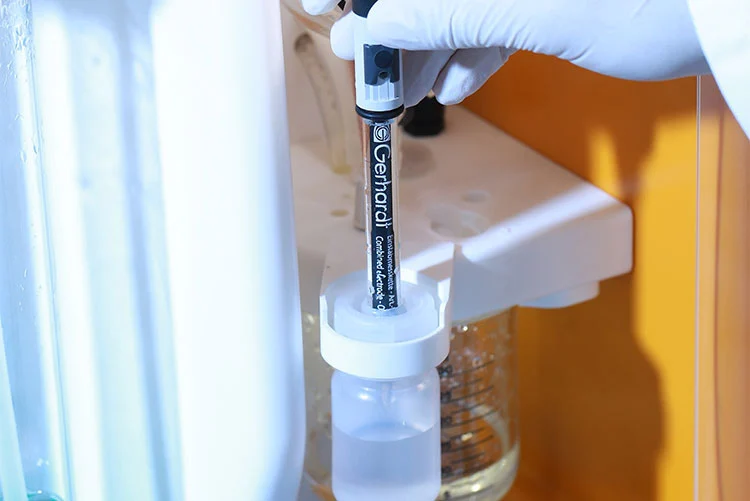
Note: This guide focuses on safety controls during the procurement of industrial-grade hydroxypropyl methylcellulose (HPMC), primarily to mitigate usage hazards (such as respiratory irritation, skin damage, and environmental risks) caused by “excessive impurities and substandard quality.” When procuring, require suppliers to provide CMA/CNAS-accredited third-party test reports and verify each of the following indicators. Products failing to meet specifications are strictly prohibited from procurement.
I. Industrial-Grade HPMC Core Safety Indicators
—Mandatory Inspection, Directly Related to Human and Environmental Hazards
1.Purity (dry basis)
- Testing purpose: To prevent impurities (such as unreacted cellulose, salts) from exacerbating respiratory irritation, skin discomfort, and reducing accidental ingestion risks;
- Acceptance criteria: ≥98.5% (Industrial Grade Premium), ≥97% (Industrial Grade Standard);
- Procurement verification: Must explicitly state “dry basis purity” in test reports; Reject reports labeling only “purity” without specifying the basis.
2.Ash Content (850°C, 2h)
- Testing Purpose: Control inorganic impurities (e.g., sodium chloride, heavy metals) to prevent skin irritation and environmental contamination.
- Acceptance Criteria: ≤1.5% (General Industrial Grade Standard), ≤1.0% for HPMC used in building materials.
- Procurement Verification: Focus on ash content exceeding limits, as this may indicate crude production processes and incomplete impurity removal.
3.Heavy Metals (Lead, Cadmium, Mercury, Arsenic)
- Testing Purpose: Heavy metal residues cause long-term health hazards through skin contact and environmental permeation (e.g., lead poisoning, kidney damage).
- Compliance Standards: Lead ≤10mg/kg, Cadmium ≤2mg/kg, Mercury ≤1mg/kg, Arsenic ≤3mg/kg (conforming to GB/T 20370-2018 standard);
- Procurement Verification: Suppliers must provide specialized heavy metal testing reports, with strict control required for HPMC used in building materials (interior decoration) applications.
4.Purpose of Free
- Formaldehyde Testing: Formaldehyde residues irritate the respiratory tract and skin; prolonged exposure may cause cancer.
- Compliance Standards: ≤50mg/kg (general industrial-grade standard); HPMC for indoor building materials must be ≤20mg/kg.
- Procurement Verification: For decoration and building material applications, emphasize formaldehyde testing metrics to avoid purchasing products with excessive formaldehyde levels.
II. Industrial-Grade HPMC Quality-Related Safety Indicators
—Supporting Hazard Prevention and Mitigation, Avoiding Usage Risks
1.Particle Size Distribution
Testing Purpose: Excessively fine particles generate significant dust, increasing respiratory irritation; excessively coarse particles impair application effectiveness (e.g., mortar dispersion).
Acceptance Criteria: 80 mesh pass rate ≥99%, 200 mesh pass rate ≥95% (general industrial grade). Adjustable based on application scenarios.
Procurement Verification: Align particle size specifications with construction/production requirements and protective measures (e.g., enhanced dust protection for fine-particle products).2.Moisture Content
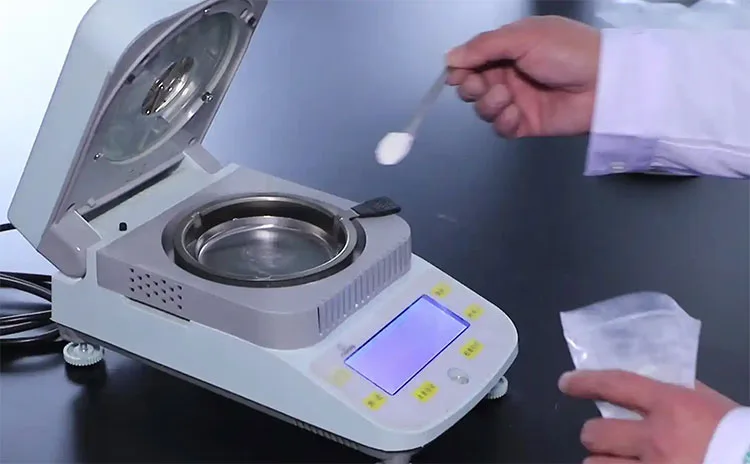
Testing Purpose: Excessive moisture causes product caking and degradation. Caked material releases concentrated dust during use, increasing irritation risk. Acceptance Criteria: ≤5.0% (industrial grade).
Procurement Verification: Verify moisture readings in test reports and inspect product packaging on-site (no damage, no moisture-induced caking).3.Substitution Degree (Methyl Oxy, Hydroxypropoxy)
Testing Purpose: Substitution degree non-compliance causes abnormal HPMC performance (e.g., poor solubility, unstable viscosity), potentially triggering construction failures (e.g., wall cracking) and indirectly increasing operational risks.
Acceptance Criteria: Methoxy content 19%-30%, hydroxypropoxy content 4%-12% (compliant with GB/T 20370-2018 standard).
Procurement Verification: Substitution degree is a core performance indicator requiring alignment with safe application scenarios (e.g., high-substitution products exhibit superior solubility and lower dust risk).4.Viscosity (2% aqueous solution, 25°C)
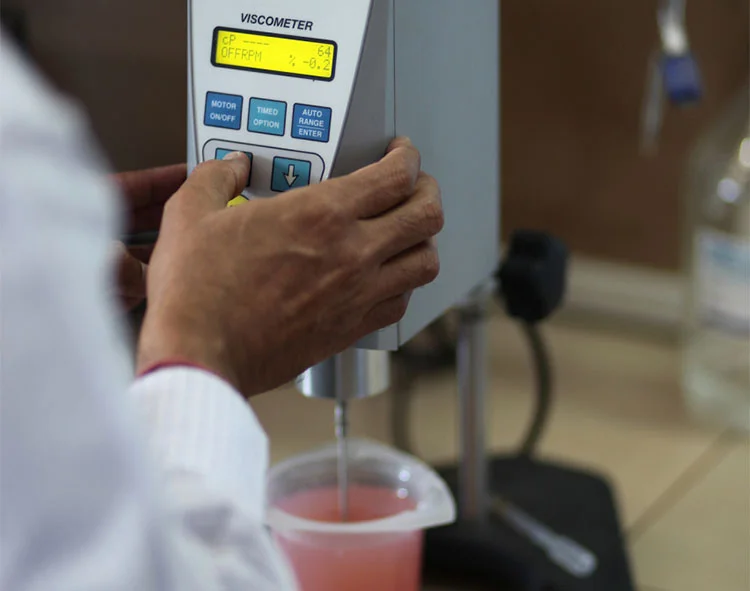
Testing Purpose: Abnormal viscosity impairs application effectiveness (e.g., poor mortar water retention), leading to rework and increased worker exposure risk.
Acceptance Criteria: Select based on application (e.g., 50,000–100,000 mPa·s for building materials, 10,000–30,000 mPa·s for coatings), deviation ≤ ±10%;
Procurement Verification: Viscosity specifications must align with actual usage requirements to prevent additional exposure hazards from performance mismatches.
III. Industrial-Grade HPMC Environmental Compliance Metrics
—Mitigating Environmental Hazards and Avoiding Compliance Risks
1.Volatile Organic Compounds (VOCs) Residue
Testing Purpose: To control residual levels of raw materials such as propylene oxide and chloroform during production, preventing VOCs release that could pollute the environment and irritate the respiratory tract during use.
Compliance Standard: ≤100mg/kg
Procurement Verification: For HPMC used in indoor or enclosed spaces, this indicator requires special verification to avoid environmental compliance risks.2.Biodegradability
Testing Purpose: Facilitate waste disposal and reduce cumulative environmental hazards;
Compliance Standard: 28-day biodegradation rate ≥60%;
Procurement Verification: For regions/industries with stringent environmental requirements, request biodegradability test reports.
IV. Specialized Testing Criteria for HPMC in Building Materials
—Mandatory Testing for Specific Applications, Enhancing Usage Safety
1. Alkali Resistance (2% NaOH solution, 25°C, 24h)
Test Purpose: HPMC used in building materials frequently contacts alkaline substrates like cement and lime. Insufficient alkali resistance leads to performance failure (e.g., viscosity reduction, loss of water retention), causing wall cracking and peeling issues while increasing rework risks.
Qualification Standard: Viscosity retention rate ≥85%, no noticeable precipitation or separation.
Procurement Verification: Specialized alkali resistance test reports must be provided, particularly for products used in alkaline environments like exterior walls and basements.2. Water Retention (Mortar Method, 2h)
Testing Purpose: Water retention is a core property of HPMC for building materials. Poor water retention causes rapid mortar dehydration, compromising workability and increasing dust exposure for workers, while also creating safety hazards like hollow walls and cracking.
Qualification Standard: ≥90% (for wall plastering), ≥95% (for tile adhesives and putty);
Procurement Verification: Water retention specifications must align with specific building material applications to prevent construction safety risks due to substandard performance.3. Weather Resistance (UV Aging, 1000h)
Testing Purpose: Insufficient weather resistance in HPMC for exterior wall materials leads to performance degradation after prolonged sun exposure and rainfall, causing issues like exterior wall detachment and leakage, indirectly increasing maintenance hazards.
Qualification Standard: No significant yellowing or chalking; viscosity retention rate ≥80%.
Procurement Verification: This criterion must be verified for HPMC used in exterior walls. Standards may be moderately relaxed in dry inland regions but must be strictly enforced in coastal and high-temperature areas.4. Compatibility with Cement/Aggregates
Testing Purpose: Prevents HPMC from reacting with building material substrates (cement, aggregates, etc.) to produce harmful substances or cause abnormal mortar setting times (too fast/too slow), which could trigger construction safety incidents.
Qualification Standard: Mortar setting time must comply with industry standards (initial setting ≥4 hours, final setting ≤12 hours), with no abnormal exothermic reactions or expansion.
Procurement Verification: Suppliers must provide compatibility test reports. Small-batch on-site trial mixing may be required for verification when necessary.
V. Industrial-Grade HPMC Procurement Verification Notes
—Key Pitfall Avoidance Points
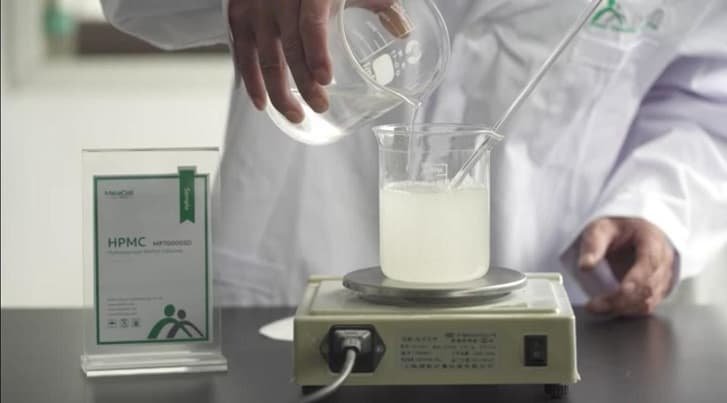
1.All testing indicators must comply with the industrial-grade standard for Hydroxypropyl Methylcellulose (GB/T 20370-2018). Suppliers must provide third-party test reports issued within the past six months (with verifiable CMA/CNAS accreditation).
2.For specialized applications (e.g., food processing aids, pharmaceutical excipients), upgrade to food-grade/pharmaceutical-grade standards and additionally verify indicators such as “Microbial Limits” and “Residue on Ignition”;
3.Reject unbranded products without testing reports or production qualifications (“three-no products”). Such products likely exceed impurity and harmful substance residue limits, significantly increasing usage risks.
4.When signing procurement contracts, clearly stipulate the above indicator requirements and return/exchange terms for non-compliant products to mitigate procurement risks.
In summary
Hydroxypropyl methylcellulose (HPMC), a cellulose ether derivative widely used in construction materials, pharmaceuticals, food, and other fields, is inherently low-toxicity. However, certain potential hazards may still exist during production, use, and handling. Purchasers should conduct checklist-based testing on procured products based on actual conditions and specific requirements to meet construction standards. Melacoll™ HPMC is a premium product of exceptional quality. We sincerely invite major buyers to promptly adjust their procurement strategies to source our products. Complimentary samples provide you with an added layer of assurance!

Posted by Melacollleave words
Hi, I'm Ella, I have been engaged in the cellulose ether industry for 12 years.

Leave a Reply