
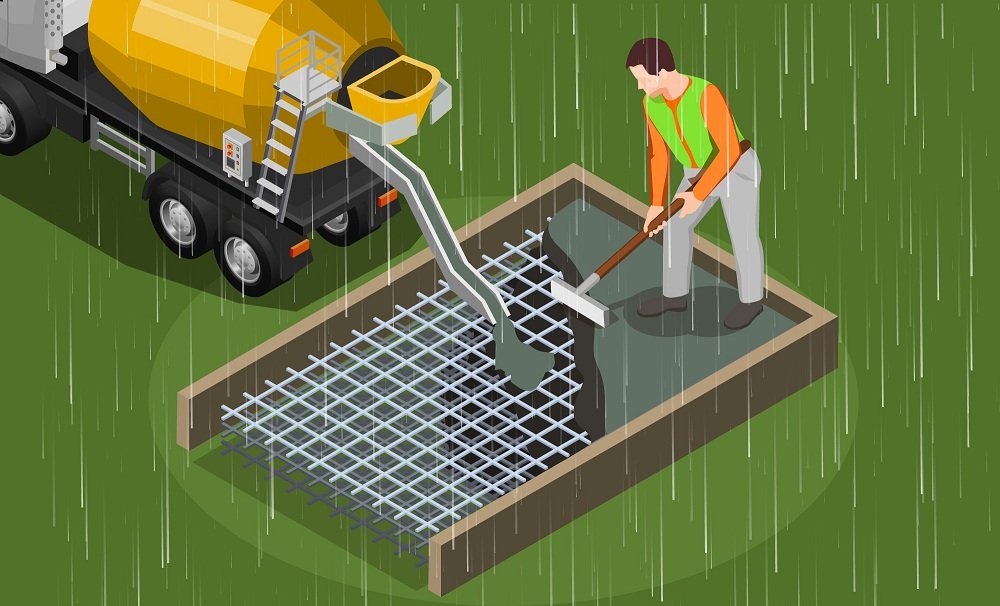
Unpredictable weather is one of the biggest challenges in the construction industry. You have your crew ready, the mixer trucks are arriving on schedule, and suddenly, the sky opens up. The immediate question every contractor faces is: Is it OK to pour concrete in the rain?
The short answer is: It depends on the intensity of the rain and your site preparation. While a light drizzle might not ruin your project, a heavy downpour can severely compromise the structural integrity of your concrete.
In this comprehensive guide, we will explore exactly how rain affects concrete, what actionable steps you should take when caught in a storm, and how optimizing your mix with premium construction additives can add an essential layer of security to your projects.
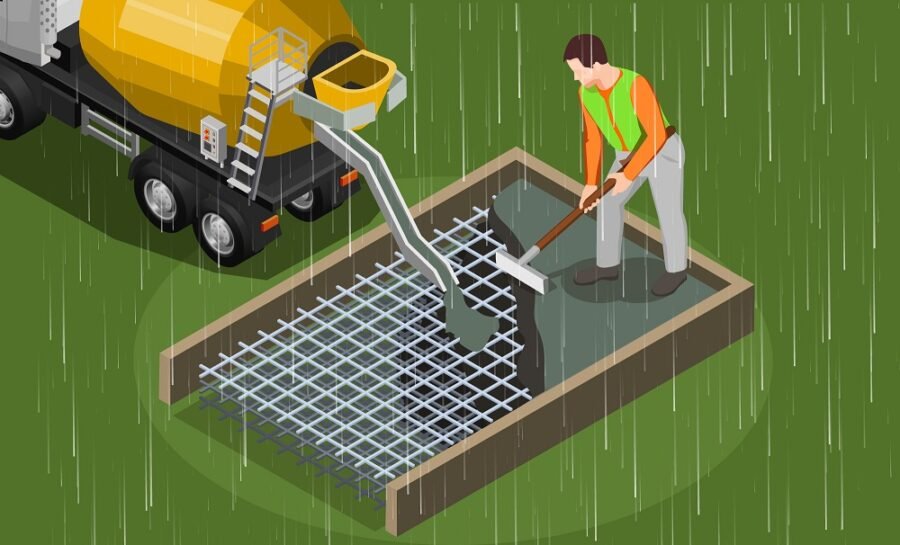
The Core Problem: The Water-Cement (W/C) Ratio
The golden rule of concrete and mortar formulation revolves around the Water-Cement (W/C) ratio. Concrete requires a very specific, calculated amount of water to activate the cementitious materials, hydrate properly, and cure.
When external rainwater enters the equation during a pour, it alters this delicate chemical balance. This disruption leads to three major issues:
1. Decreased Compressive Strength
If excessive rainwater mixes into the top layer of freshly poured concrete, it artificially increases the water-cement ratio. A higher W/C ratio dilutes the cement paste, significantly lowering the ultimate compressive strength of the concrete surface. This can lead to a weak top layer that fails to meet load-bearing engineering requirements.
2. Compromised Durability (Scaling and Dusting)
Durability is closely linked to how dense and impermeable the concrete is. Rainwater washing over uncured concrete can cause surface scaling, crazing (fine surface cracks), and dusting once the slab eventually dries. The surface becomes porous, making it highly vulnerable to freeze-thaw cycles, chemical attacks, and water permeation in the future.
3. Poor Aesthetic Appearance
For exposed concrete surfaces, appearance matters. Raindrops can leave permanent pockmarks on the finish. Furthermore, heavy rain can wash away the fine cement slurry entirely, leaving the coarse aggregates exposed and resulting in an uneven, patchy, and visually unacceptable finish.
Light Rain vs. Heavy Rain: When to Stop?
Not all rain events require you to shut down the job site. Here is the general industry consensus:
Light Rain (Drizzle): Generally, pouring can continue. A light mist rarely penetrates deep into the dense internal structure of the concrete. Since pouring is usually done in layers, the structural integrity remains largely intact. However, you must still sweep off any surface standing water before applying the subsequent layer.
Heavy Rain or Storms: Stop immediately. Force-pouring in heavy rain will wash away the vital cement paste. You must halt the pour, properly cover the site, and prepare to create a cold joint (construction joint) for when the weather clears.
8 Essential Quality Control Measures for Rainy Days
To avoid costly rework and ensure structural safety, contractors must implement strict quality control protocols. Here is an actionable checklist:
Pre-Pour Preparation:
Track Weather and Plan Ahead: Always monitor local weather radars before ordering concrete. Compile a rainy-day pouring protocol and ensure all site workers understand the emergency steps.
Stockpile Protective Covers: Keep an ample supply of waterproof tarps or heavy-duty plastic sheeting on-site. You need to be able to quickly cover the poured concrete and raw materials if the weather turns.
During the Pour (If Rain Starts):
- Adjust the Mix Ratio (Slump Control): If you anticipate wet conditions, frequently check the moisture content of your sand and aggregates. You may need to ask the batch plant to slightly reduce the slump (water content) of the arriving concrete to compensate for the extra moisture from the rain.
- Drain Standing Water: Never pour concrete into puddles. Use suction pumps, sponges, or brooms to remove standing water from the forms.
- Clear the Chute: Before discharging material from the mixer truck, ensure the hopper and chute are entirely free of accumulated rainwater.
- Slanted Pouring Technique: Pour concrete on a slight incline so that rainwater naturally runs off the surface rather than pooling in the center of the slab.
Post-Pour Protection:
- Cover Promptly and Securely: As soon as a section is finished and leveled, cover it with plastic sheeting. Ensure the edges are tightly secured so the wind doesn't blow the covers off.
- Don't Work Rain into the Surface: This is a critical error. Never use a trowel or float while it's actively raining or when there is visible bleed water on the surface. Doing so will push the excess water directly into the concrete finish, guaranteeing a weak, dusty surface later.
Enhancing Weather Resilience with Advanced Additives
While physical covers and site management are crucial, true resilience starts inside the mix. Dealing with unpredictable weather requires a highly stable, cohesive, and workable formulation from the very beginning. This is where high-quality construction additives become a game-changer.
By incorporating premium chemical additives into your dry mix mortars or ready-mix concrete, you create a buffer against adverse conditions. Two of the most critical components are:
Advanced Water Reducers (Superplasticizers): Polycarboxylate-based superplasticizers (PCEs) are designed to drastically increase the flow and workability of concrete without adding extra water. By significantly lowering the initial W/C ratio, they provide a massive "strength buffer." Even if a slight amount of rainwater mixes into the surface, the overall strength remains robust and well within safety margins.
Specialized Cellulose Ethers (HPMC, HEMC, HEC): In dry mix mortars and specialized concrete applications, cellulose ethers act as powerful water-retaining and thickening agents. They form a microscopic gel network that locks moisture inside the mix, preventing it from being drawn out by porous substrates. More importantly for rainy conditions, they increase the cohesion and anti-washout properties of the material, preventing the essential cement slurry from being easily washed away by sudden rainfall.

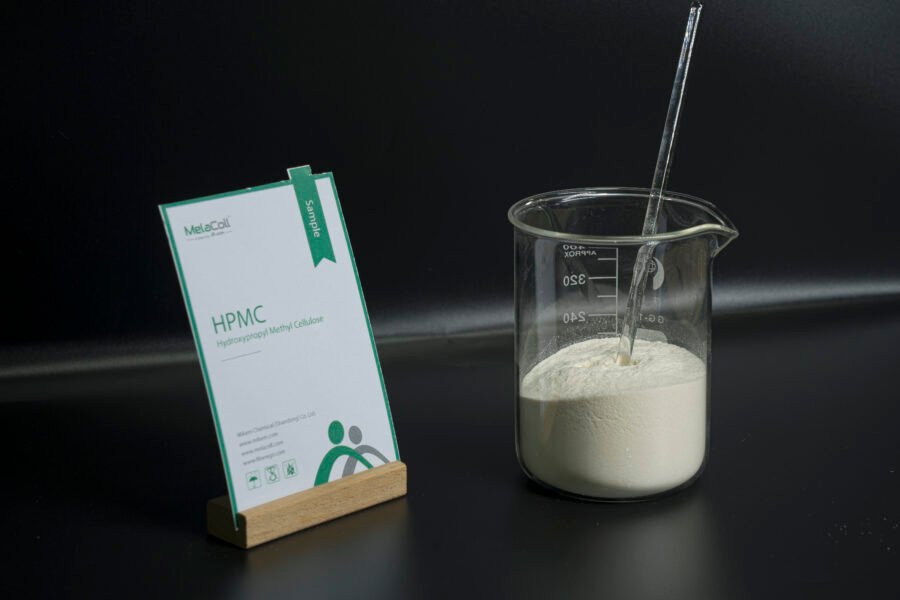
At Melacoll, we specialize in engineering top-tier construction additives designed to optimize the performance of dry mix mortars, tile adhesives, and related building materials. By upgrading your formulations with our reliable cellulose ethers and polymer additives, you ensure superior workability, exceptional water retention, and higher final strength.
Conclusion
You can't control the weather, but you can control your preparation. Pouring concrete in the rain is always a risk, but it is a manageable one. By understanding how water impacts your mix, keeping emergency protective gear on hand, and fortifying your formulations with professional-grade Melacoll additives, you can protect your project’s structural integrity, durability, and your bottom line.

Posted by Melacollleave words
Hi, I'm Ella, I have been engaged in the cellulose ether industry for 12 years.

Leave a Reply